AstrotalkUK

Not for profit podcast. Astronomy, Deep Space Exploration and International Collaboration

  • Home
    • FAQ
    • Contact
    • About
    • Privacy Policy
  • Content
    • Podcast
    • All episodes
    • Book Review
    • Cyber Security
  • Events

Episode 37: November 21st 2010 : Progress of Science through the Ages

By Gurbir Dated: November 22, 2010 3 Comments

On November 3rd this year, Professor Jim Al-khalili was to give three lectures in Liverpool on the same day (Quantum Physics, Advances in Mathematics in Medieval Islam and On the Shoulders of Eastern Giants: the Forgotten Contribution of the Medieval Physicists). I did feel a bit of a stalker, I attended all three, but fortunately I was not alone.

It is not often that I get to witness the scientific method in real life personally. The most illuminating part of the day of the three lectures was the Q&A following the second lecture. A questioner put her hand up and stated clearly that she had a correction, not a question. She had heard the professor discuss the concept and symbol of the number zero. During his lecture, the professor had recalled the contributions from the Babylonians, Mayans and Indian mathematicians. The questioner had been researching the substantial Egyptian contribution to this area, which the professor had not mentioned. What happened next was an affirmation of the scientific method.

The professor could have been defensive, confrontational or dismissive. Instead, he listened to her argument and asked her to stay behind to so he could learn details of her research. That is the power of the scientific idea. It stands only on the edifice of evidence and not the economic wealth, social position or academic reputation of those who hold it.

The progress of scientific knowledge is not continuous and linear but evolves through a series of stops and starts. Thomas Kuhn, in his 1962 book “The Structure of Scientific Revolutions” described the progress of science as periodic “paradigm shifts”. He was referring to the fundamental differences in thinking that have led to leaps in scientific understanding.

Could that stop-and-start concept describe how science develops through the ages, too? Scientific discoveries are frequently lost, forgotten or deliberately suppressed. So the story of scientific discovery is frequently a story of rediscovery. William Harvey ‘s discovery in 1628 of the human heart and circulation of blood though the human body had much in common with that of Ibn al-Nafis 400 years earlier. Nicolas Copernicus is credited in the 16th century with introducing the heliocentric system (placing the Sun not the Earth, in the centre of the solar system) but this idea had been propounded by Aristarchus in the third century BC.

The omissions are not just in science. One example of technological development lost for over a thousand years that sticks out like a sore thumb is the Antikythera mechanism, a device for calculating and displaying relative positions of the Sun, Moon and planets. The precision of the internal mechanism would not be repeated for over a thousand years.

Why these omissions occur is unclear. History, like science, is always a work in progress. Reflecting on why the ancient Greek tradition of scientific method stalled, Carl Sagan, in his celebrated work, Cosmos, concluded that their society was elitist and self-serving. Key figures like Plato were hostile to experiment and perpetuated the idea that human thought alone was sufficient to explain the physical world. This intellectually corrupt approach sustained their slave, unjust society. Search for truth was not their goal.

In his new book “Pathfinders” Professor Al-Khalili attempts to fill “a” gap in the history of science by revisiting the work done by the Arabic scholars during the period known in Europe as the dark ages. It is not a story of Islamic science but of science conducted in the Arabic language which has its roots in Islam. For around 600 years (from 9th to the 15th century), sandwiched between Greek and Latin, the international language of science was Arabic.

A professor of theoretical nuclear physics in the University of Surrey, he was born in Baghdad to a Christian mother and a Muslim father. As an atheist, Jim Al-Khalili emphasises the role of Islamic, Persian, Christian and Jewish scholars who not only translated the work of the ancient Greeks but also enhanced and developed it. Just as the ancient Greeks took the concept of an alphabet from the earlier Phoenician civilisation and developed the written language, the scientific (re)discoveries we traditionally associate with the European Renaissance were built in turn on the progress during this golden age of Arabic science.

Professor Jim Al-Khalili has his own podcast, but here is a recording we made for this one just prior to the start of his three-lecture session. To start off with, I asked about his personal interest in astronomy.

_________________________

The quote for this episode is from the Prophet Mohammed and is in chapter 2 of Pathfinders.

“The ink of the scholar is more sacred than the blood of the martyr”

https://media.blubrry.com/astrotalkuk_podcast_feed/astrotalkuk.org/wp-content/uploads/episode37.mp3

Podcast: Play in new window | Download (Duration: 19:20 — 17.7MB) | Embed

Subscribe: Apple Podcasts | Spotify | RSS | More
Share this:

  • Click to share on LinkedIn (Opens in new window) LinkedIn
  • Click to share on Facebook (Opens in new window) Facebook
  • Click to share on Bluesky (Opens in new window) Bluesky

Episode 36: October 11th 2010 – UK Space Policy and Yuri Gagarin’s visit to Manchester and London in July 1961

By Gurbir Dated: October 12, 2010 7 Comments

Next year, April 12th  2011, marks the 50th anniversary of Yuri Gagarin’s,  mankind’s,  first steps into space. It was a product of the accumulated technology of many countries over many years, but particularly driven by the political landscape resulting from the 2nd world War. Since then, successful robotic missions have visited the planets, asteroids and comets. 24 men have gone to the moon and a dozen have even walked on its surface.

Subsequent achievements have fallen short of the expectations raised by Gagarin’s flight. Gagarin himself openly spoke of his desire to go to the moon and Mars. That sounds like a pipe dream now but back in 1961, he was absolutely serious and realistic.

So what happened? Had the space race been won when Neil and Buzz landed on the Moon? Had the motivation borne out of political rivalries of the Cold War finally been exhausted? Perhaps, the problems closer at home of poverty, population growth, and environmental concerns raced to the top of the political agenda and forced governments into a pragmatic reconsideration of how they spent their cash?

Big questions. Too big for this episode, where Dr Chris Welch from Kingston University provides a brief outline of the current status of the Space policy here in the UK.   Dr Welch  also happens to be the chair of the of recently launched YuriGagarin50 group which has amongst its aims:

Stimulate celebration and recognition of the global significance of Gagarin and his flight – ‘the first person in space, the first person to see the Earth as a planet’.

After his flight, Yuri Gagarin embarked on a world tour that included a 4-day visit to the UK, during which he surprisingly visited Manchester on 12th July 1961. By chance, Gagarin’s first job was as a moulder in a foundry in Moscow.   He came to the UK and Manchester at the invitation of the Manchester-based Amalgamated Union of Foundry Workers. I will be producing another episode focusing on Gagarin’s UK visit next year. Did you see Gagarin in July 1961? Do you know someone who did? Share your memories. Drop me a note at info@astrotalkuk.org.

With many months to go to next year’s 50th anniversary, there are several events already being planned  to celebrate mankind’s first steps into space. Keep an eye on the events calendar at  www.yurigagarin50.org

________________________________________________

The quote for this episode is from the Soviet government in 1961 following Gagarin’s success in Vostok 1. Perhaps they were deliberately winding up the Americans but there is something warm and reassuring to see a couple of familiar words in the quote  “all mankind” that are on the plaque left on the Moon by the Apollo 11 astronauts. A 1961 official Soviet Government and Communist Party announcement said.

“We regard these victories in the conquest of outer space not only as the achievement of our people but as an achievement of all mankind”

A video version of this podcast is available on Vimeo here.

https://media.blubrry.com/astrotalkuk_podcast_feed/astrotalkuk.org/wp-content/uploads/episode36.mp3

Podcast: Play in new window | Download (Duration: 16:51 — 15.4MB) | Embed

Subscribe: Apple Podcasts | Spotify | RSS | More
Share this:

  • Click to share on LinkedIn (Opens in new window) LinkedIn
  • Click to share on Facebook (Opens in new window) Facebook
  • Click to share on Bluesky (Opens in new window) Bluesky

Episode 35: 22nd July 2010: Dr Edgar Mitchell – Apollo 14

By Gurbir Dated: July 26, 2010 4 Comments

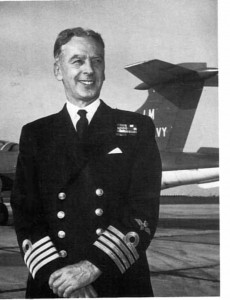
A man playing golf on the moon is one of the images permanently etched into the collective memory of humanity’s first exploration of the moon. The so called “golf player” was Alan Shepard the guy with him was Dr Edgar Mitchell whilst Stuart Roosa orbited the moon in the command module. Today, Ed Mitchell, two months away from his 80th birthday is the only remaining member of the Apollo 14 crew.

On a recent visit to Pontefract, organised once again by Ken Willoughby, he describes his personal journey to the moon. Amongst other things he highlights his javelin throw which, by a narrow margin, beat the golf ball, as a picture in his presentation illustrates. He spent nine hours on the surface of the moon during two EVAs on February 5th and 6th 1971. Apollo 14 was his only space flight and he left NASA in the following year.

Ed Mitchell is perhaps best known for his epiphany moment on the return journey to Earth when he experienced a unique spiritual sensation which has dominated his professional and personal life ever since. To help understand it, he left NASA and establish the Institute of Noetic Sciences. Over the last few years he has frequently spoken publicly about his interest in the paranormal, ESP and UFOs. He asserts that the Roswell incident was real, aliens have landed on the Earth and the US military is responsible for a cover-up.

It is strange that someone (a navy pilot and an Apollo astronaut) with a professional life dominated by leading edge science and technology can hold such an unscientific position. He appears oblivious to the contradiction in referring to himself as an astrophysicist and yet accepting Fred Hoyle’s Steady State explanation of cosmology, for which there is little evidence, over the Big Bang. I wonder how he explains Hubble’s law and the expansion of space, Cosmic microwave background radiation and the relative abundance of primordial elements.

I really should have asked him. I did not in part out of deference. Despite his age and unusual views, he remains a member of a unique group of individuals with a special contribution to human history. Who knows, he may well turn out to be right. In the meantime, the main road of science, directed by the sign posts of  observational evidence, is probably still the  best path to a more accurate understanding of the cosmos.

Dr Mitchell was kind enough to share his power point slides which I have incorporated into the hour long video presentation. Links to that presentation and a video version of this episode below.

====================================

An increasingly familiar quote from someone else who made a huge contribution to how we should go about understanding the cosmos. Carl Sagan.

“I believe that the extraordinary should be pursued. But extraordinary claims require extraordinary evidence” .

https://media.blubrry.com/astrotalkuk_podcast_feed/astrotalkuk.org/wp-content/uploads/episode35.mp3

Podcast: Play in new window | Download (15.8MB) | Embed

Subscribe: Apple Podcasts | Spotify | RSS | More

Episode 35 – Video (10 minutes)

Dr Edgar Mitchell 2nd July 2010 from AstrotalkUK on Vimeo.

Share this:

  • Click to share on LinkedIn (Opens in new window) LinkedIn
  • Click to share on Facebook (Opens in new window) Facebook
  • Click to share on Bluesky (Opens in new window) Bluesky

Episode 34: May 31st 2010 Effelsberg Radio Telescope

By Gurbir Dated: June 5, 2010 1 Comment

Effelsberg Nestling in a valley amongst the rolling green hills of the Eifel region of western Germany is the 100m Effelsberg steerable radio telescope. Similar to the Lovell telescope at Jodrell Bank which is on the plains of Cheshire in northwest England which can be seen from miles away. The  Effelsberg telescope  is situated in a valley so it easy to pass close by and not see it.

It is an international facility. Participating in Very Long Base Interferometry (VLBI) where physical links are necessary with other countries it also hosts astronomers from many other countries  and participates in global research projects. Although its website may appear a littel dated, Effelsberg has a surprisingly rich online presence including the current schedule and of course the now mandatory webcam.

Effelsberg is a leading player in a new international project called LOw Frequency ARray or LOFAR.  Lofar targets the low frequency range between 10MHZ and 250MHZ. However, for many years commercial FM radio stations, the local emergency services and the aviation industry have been using frequencies between 90MHZ and 108MHZ so Lofar range is split in to two bands. Low (10-90MHZ) and high (108 – 250MHZ). Thus there are in fact three telescopes at Effelsberg.

On a recent visit, Dr Norbert Junkes talked about the previous, current and new activities taking place at Effelsberg.

https://media.blubrry.com/astrotalkuk_podcast_feed/astrotalkuk.org/wp-content/uploads/episode34.mp3

Podcast: Play in new window | Download (320.0KB) | Embed

Subscribe: Apple Podcasts | Spotify | RSS | More

Share this:

  • Click to share on LinkedIn (Opens in new window) LinkedIn
  • Click to share on Facebook (Opens in new window) Facebook
  • Click to share on Bluesky (Opens in new window) Bluesky
« Previous Page
Next Page »

Find me online here

  • E-mail
  • Facebook
  • LinkedIn
  • Twitter
  • Vimeo
  • YouTube

subscribe to mailing list and newsletter

  • This field is for validation purposes and should be left unchanged.

Browse by category

Recent Comments

  • Frank Pleszak on Episode 117 – Early Aviation in Manchester
  • Gurbir Singh on Episode 111 – Chandrayaan-3
  • Lunar Polar Exploration Mission: Difference between revisions – भोजपुरी on Episode 82: Jaxa and International Collaboration with Professor Fujimoto Masaki
  • Gurbir on Public Event. Anglo Indian Stephen Smith – India’s forgotten Rocketeer
  • Sandip Kumar Chakrabarti on Public Event. Anglo Indian Stephen Smith – India’s forgotten Rocketeer

Archives

Select posts by topic

apollo astrobiology Astrophotography BIS Book Review Carl Sagan CCD China chines space Cloud Computing cnsa commercial Cosmology curiosity Education ESA Gagarin History India Infosec ISRO jaxa Jodrell Bank Mars Media Moon NASA podcast radio astronomy Rakesh Sharma rocket Rockets Roscosmos Science Science Fiction seti Solar System soviet space space spaceflight titan USSR video Vostok Yuri Gagarin

Copyright © 2008–2025 Gurbir Singh - AstrotalkUK Publications Log in