AstrotalkUK

Not for profit podcast. Astronomy, Deep Space Exploration and International Collaboration

  • Home
    • FAQ
    • Contact
    • About
    • Privacy Policy
  • Content
    • Podcast
    • All episodes
    • Book Review
    • Cyber Security
  • Events

Stephen Smith and Leslie Johnson. Development of rockets during the 1930s and letters from Calcutta to Liverpool

By Gurbir Dated: March 8, 2020 3 Comments

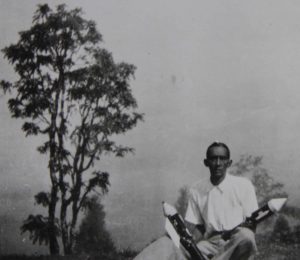
Stephen Smith with two of his rockets. Sikkim 1935, Credit Leslie Johnson

I came across the Liverpool/Calcutta connection during my research into the life and work of Stephen H Smith. During 1934 and 1944, Smith undertook around 300 rocket experiments to demonstrate the utility of a rocket to transport mail, medicines, food and living creatures. Similar experiments were being conducted in Germany, Austria, Netherlands and the USA, but in India, for over a decade it was just Smith.

The British Interplanetary Society had been founded in Liverpool in 1933. Smith conducted his first rocket experiments in September 1934 and it was published in the BIS Bulletin in November 1934. Smith in Calcutta joined the BIS around this time and established regular correspondence with the Leslie Johnson, the BIS secretary, in Liverpool. Johnson’s daughter still has a file of letters Smith sent from Calcutta to Liverpool in the late 1930s.

My book (India’s Forgotten Rocket Pioneer) will be published by the end of March 2020 and contains many pictures of Smith, his rockets and quotes from his letters. Some from the Johnson collection but other sources too.I could not include many in the book – so I am sharing some more here. Click on any of the images below to open the gallery viewer.


  • Smith conducted his first rocket mail experiment on 30 September 1934. It appeared in the November 1934 issue of the BIS Bulletin.
    Credit National Air and Space Museum. Washington DC

  • In the early 1930s, the founders of  nascent rocketry societies (Phil Cleator of the BIS in UK and Edward Pendray of the AIS in USA) were swapping notes on the work on rocketry being conducted by Smith and Goddard. Goddard’s contribution was incomparable to that of Smith’s.
    3 April 1936  From Phil Cleater to Edward Pendray.  Credit National Air and Space Museum. Washington DC 

  • To help raise funds and raise the BIS profile, members could purchase BIS headed paper to use as “Member’s correspondence”. Smith used it widely especially when communicating with the media to assert his credentials. He also used it to write one of his many letters to Leslie Johnson in Liverpool.
    29 September 1937 Members Correspondence with BIS logo. Credit Leslie Johnson

  • Stephen Smith (sitting bottom left) in Calcutta with a mostly obscured rocket launch frame for his rockets behind him. 
    22 July 1938.  Credit Ramu M Srinivasa

  • Soon after the BIS was founded in Liverpool, the Manchester Interplanetary Society was established in nearby Manchester. Headed by Eric Burgess, it did not last long and was later subsumed in to the BIS when it was reformed after the World War II in London. The MIS was just as ambitius as the BIS and published a journal called The Astronaut. 
    August 1938 – Manchester Interplanetary Society’s journal – The Astronaut.  Credit National Air and Space Museum. Washington DC.

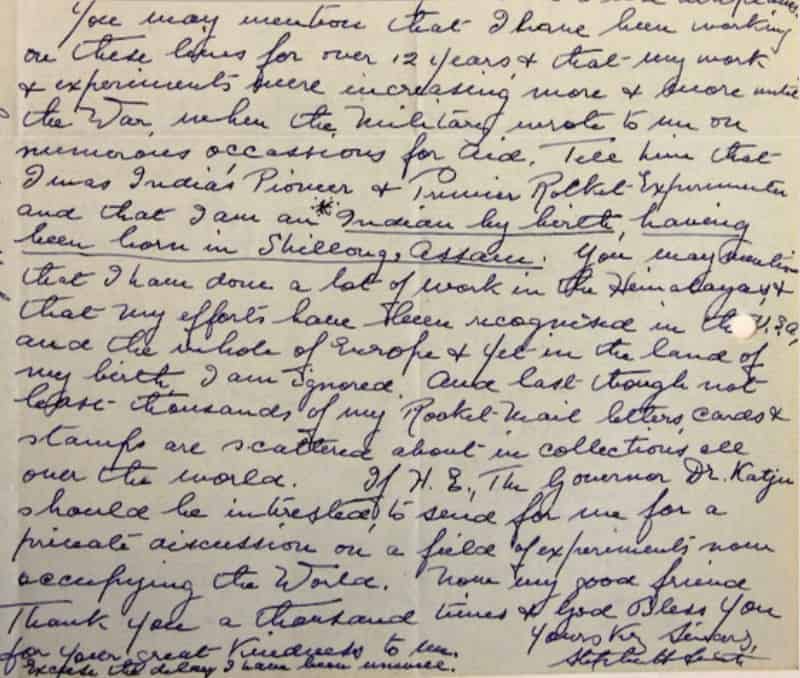
  •  7 November 1949. Stephen Smith to Robert Paganini. Transcript below.

    “You may mention that I have been working on these tests for over 12 years  and that my work and experiments were increasingly more and (more) until the war when the military wrote to me on numerous occasions for aid. Tell him that I was India’s Pioneer Rocket experimenter and that I am an Indian by birth, having been born in Shillong, Assam. You may mention that I have done work in the Himalayas and that my efforts have been recognised  in the USA and the whole of Europe and yet I’m the land of my birth I am ignored and last though not least, thousands of my rocket mail letters, cards and stamps are scattered around the world. If his excellency the governor, Dr Katju should be interested he should send for me for a private discussion on a field of experiments now occupying the world.  Thank you my good friend, thank you a thousand times and god bless you for your great kindness to me.” 
    7 November 1949. Credit Robert Paganini collection. Museum of Communication, Bern Switzerland.

  •   2 March 1950 From Stephen Smith to Robert Paganini
     Smith complaining that he has not received a response from any senior politicians including Prime Minister Nehru. “I have not heard a line from H.E. Dr Katju or Dr B. L Roy or Pandit Nehru. They will not have anything to do with anyone, except one who is an India. This is life.” 
      2 March 1950 Credit Robert Paganini collection. Museum of Communication, Bern Switzerland. 

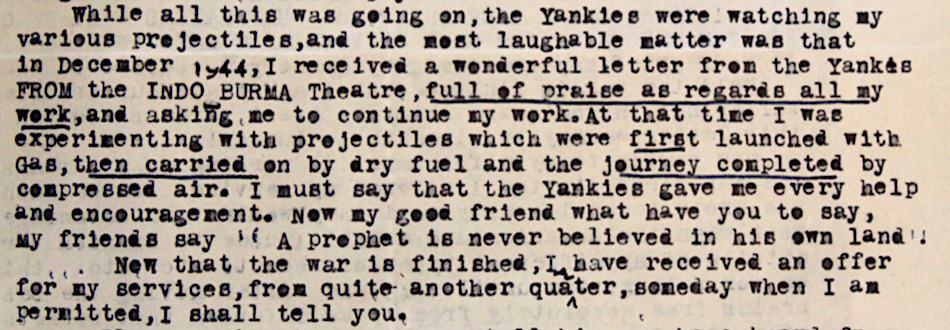
  • Smith hints at an “offer of his services” but cannot tell anyone.
    6 April 1946 from Stephen Smith to Robert Paganini
    . Credit Robert Paganini collection. Museum of Communication, Bern Switzerland

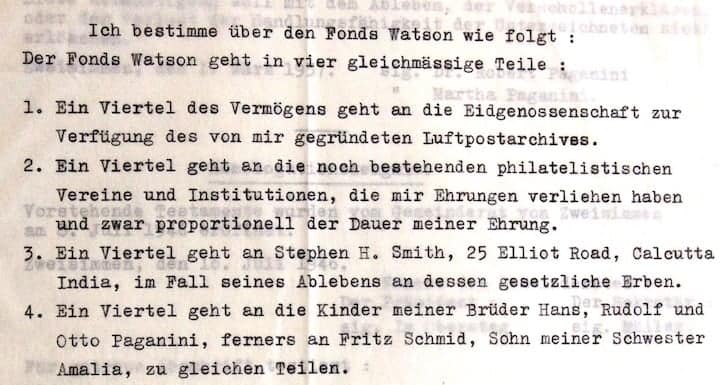
  • Extract from Robert Paganini’s will. Paganini died on 6 December 1950. He left a quarter of his estate to Stephen Smith – someone he had never met. Smith himself died three months later.
    Credit Robert Paganini collection. Museum of Communication, Bern Switzerland. 

Share this:

  • Click to share on LinkedIn (Opens in new window) LinkedIn
  • Click to share on Facebook (Opens in new window) Facebook
  • Click to share on Bluesky (Opens in new window) Bluesky

Episode 89 – Carbon Nanotubes

By Gurbir Dated: October 25, 2019 1 Comment

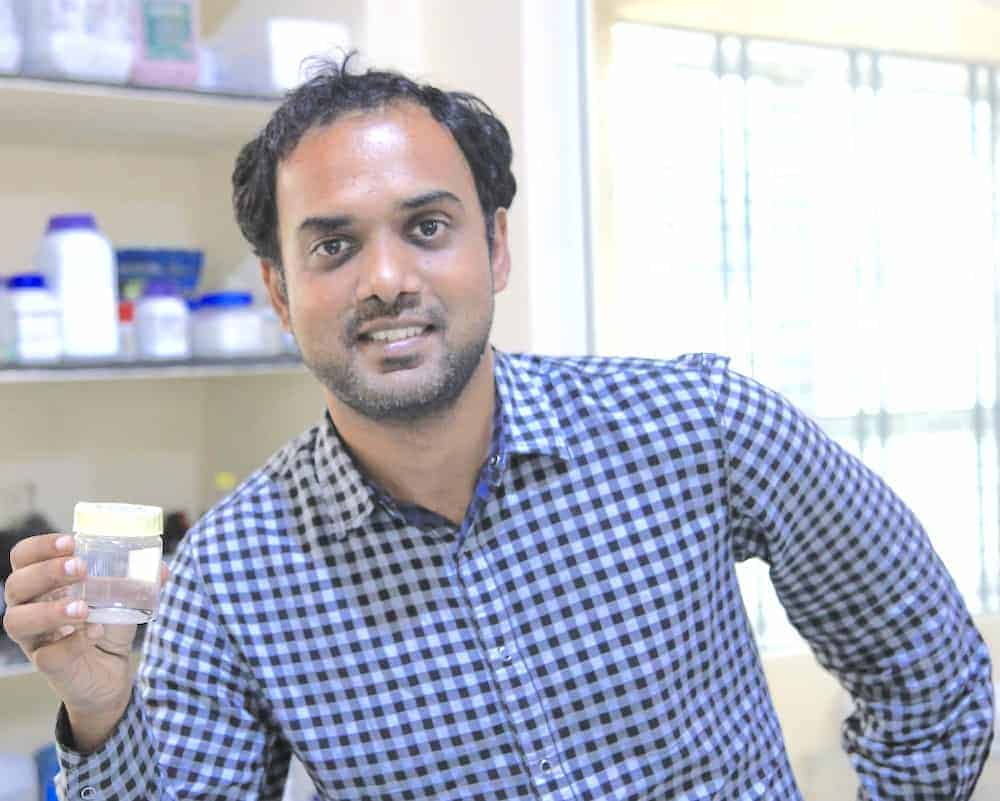
Gadhadar Reddy

In his 1979 novel, Fountains of Paradise, Arthur C Clarke imagines a cable stretching from the Earth’s equator to Geosynchronous orbit. He called it a “space elevator” and imagined it would be constructed from continuous pseudo-one-dimensional diamond crystals. Bangalore based NoPo Technologies is now commercially producing Carbon Nanotubes. Could this material, one day be used to construct Clarke’s space elevator?

Materials that offer high strength alongside low mass are highly sought after by the aerospace industry. In the past, it was aluminium, titanium and Carbon fibre. The new wave of materials consists of Graphene and Carbon nanotubes. Carbon nanotubes like diamonds, soot and graphene are allotropes of Carbon. Same atomic structure but differ in physical construction.

NoPo Technologies was established in 2011 by the CEO Gadhadar Reddy and is already commercially supply Carbon Nanotubes to Japan and elsewhere.

Some of the themes we discussed include:

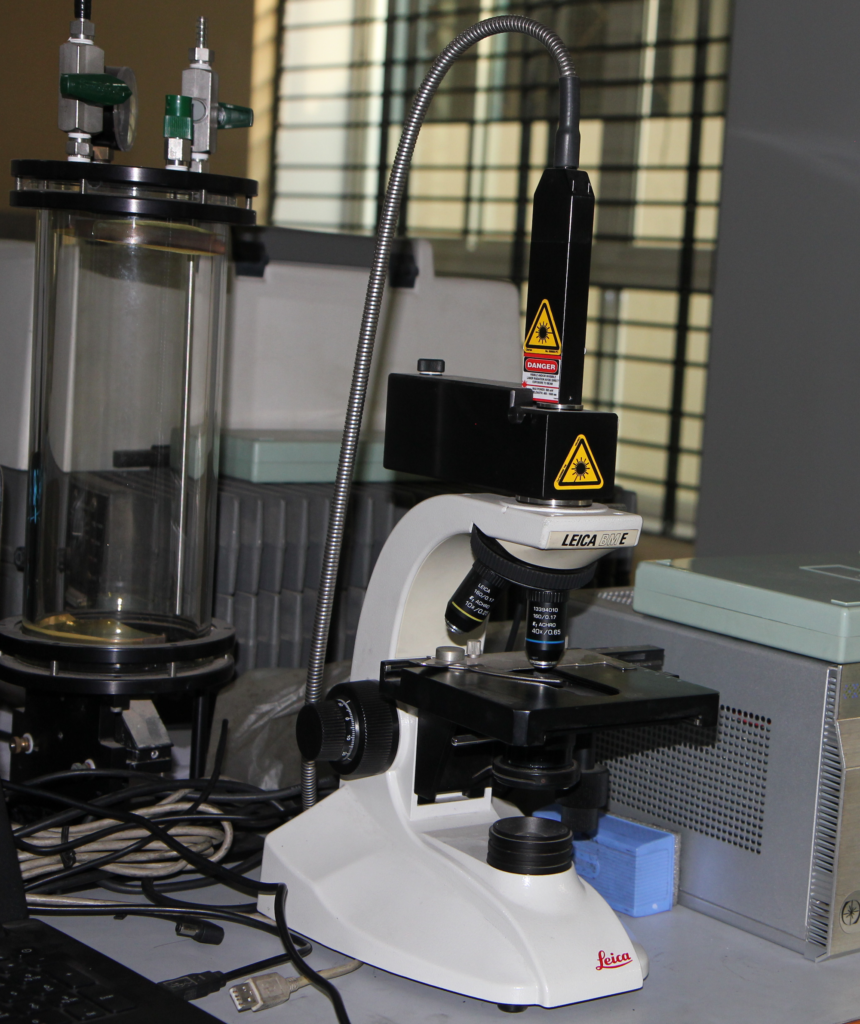
  • NoPo Technologies was incorporated in 2011 and is probably the only producer of Carbon Nanotubes in India at the present.
  • Carbon Nanotubes have desirable attributes of high thermal and electrical conductivity, tensile strength, resilience to radiation and are extremely lightweight.
  • Nopo Technologies commercially produce single-walled Carbon Nanotubes of about 8 nm diameter and 2000 nm long.
  • Use cases currently include lightning conductors on aircraft, insulators for cryogenic fuel tanks, black surfaces for star trackers on spacecraft and molecular scale filters that can be used for producing biological membranes or even water filters for desalination plants.
https://media.blubrry.com/astrotalkuk_podcast_feed/astrotalkuk.org/wp-content/uploads/2019/10/Episode-89-Gadhadar-Reddy.mp3

Podcast: Play in new window | Download (Duration: 42:58 — 34.6MB) | Embed

Subscribe: Apple Podcasts | Spotify | RSS | More


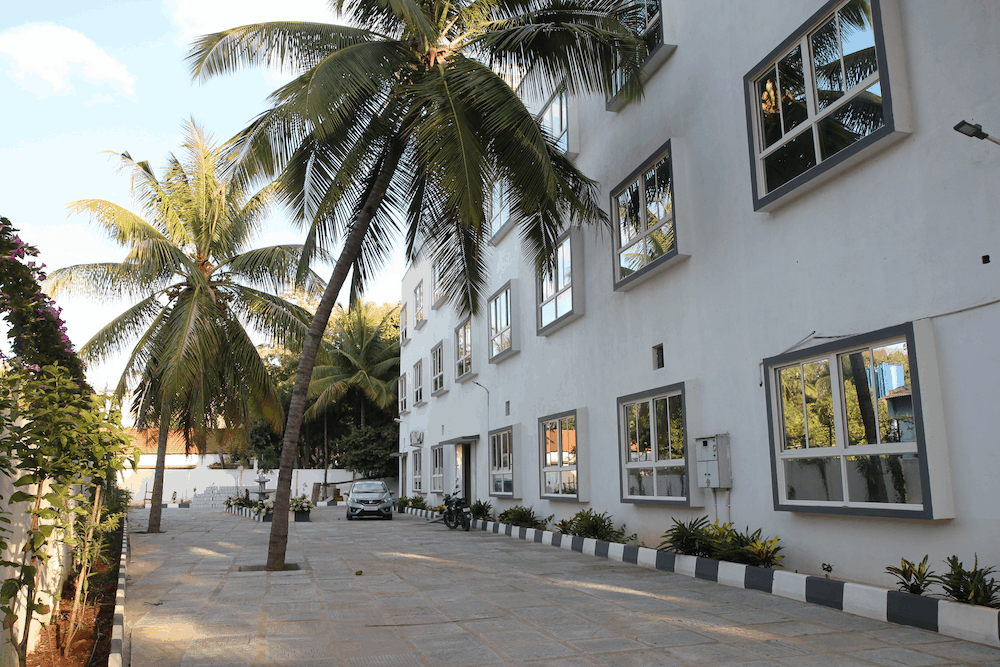
  • NOPO Offices in Bangalore
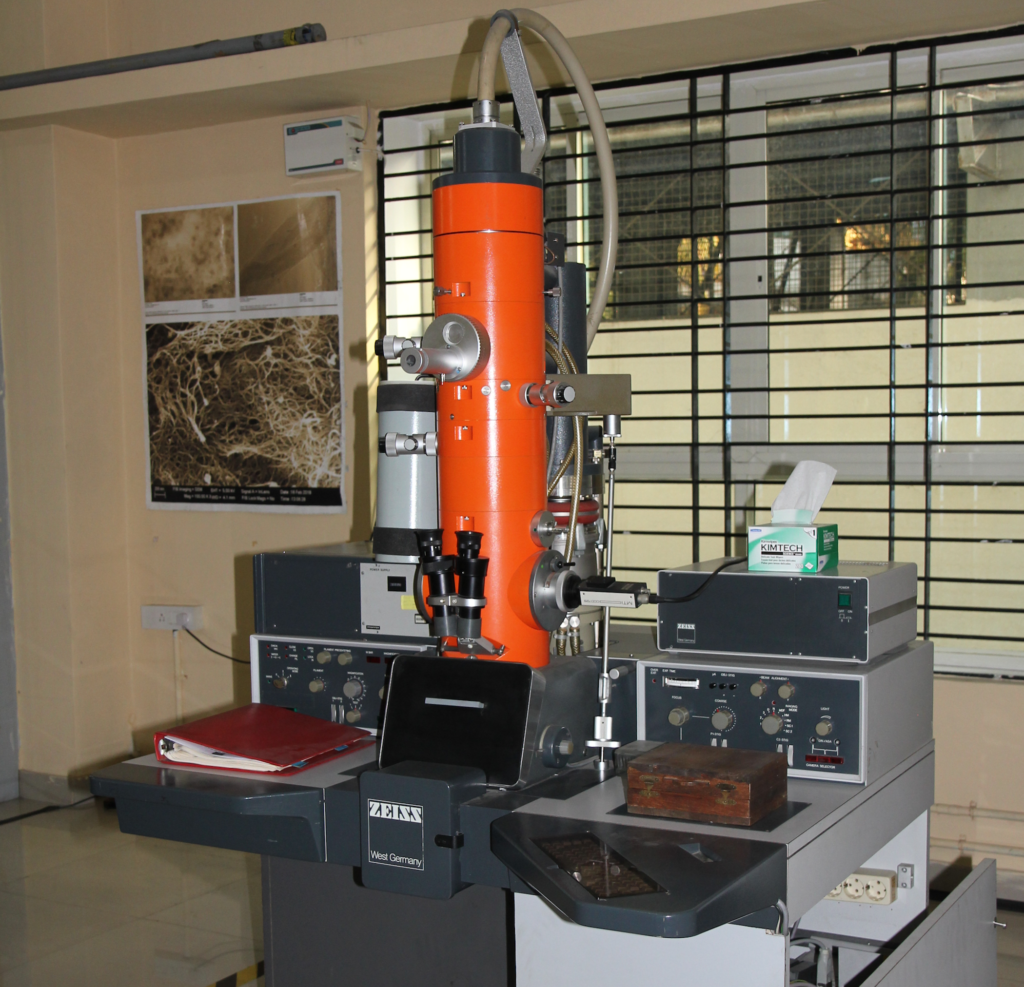
  • Electron Microscope
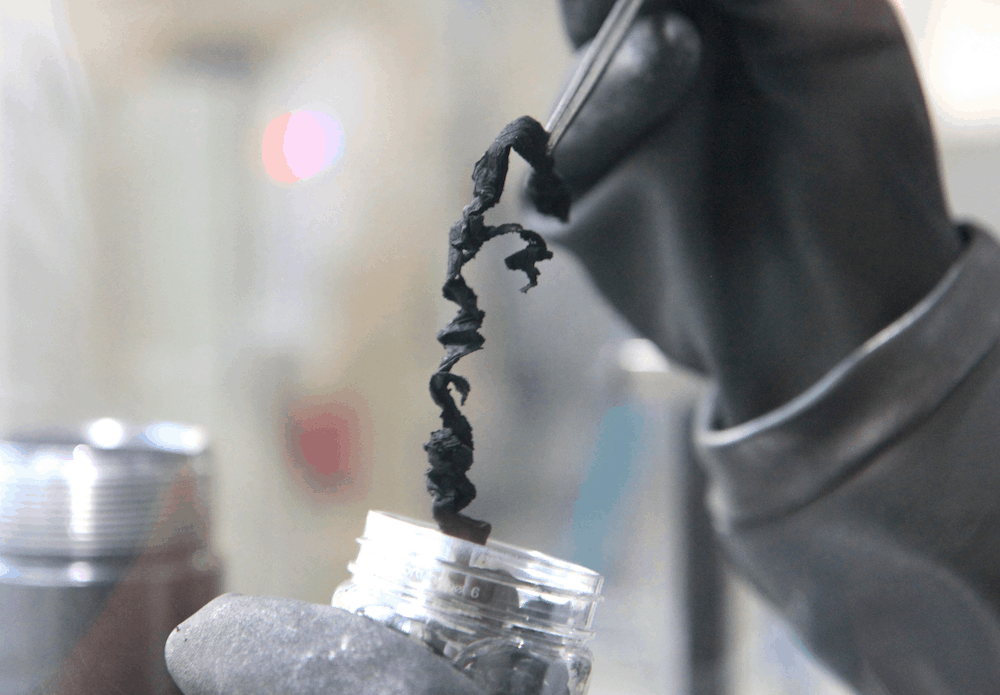
  • Carbon Nanotubes
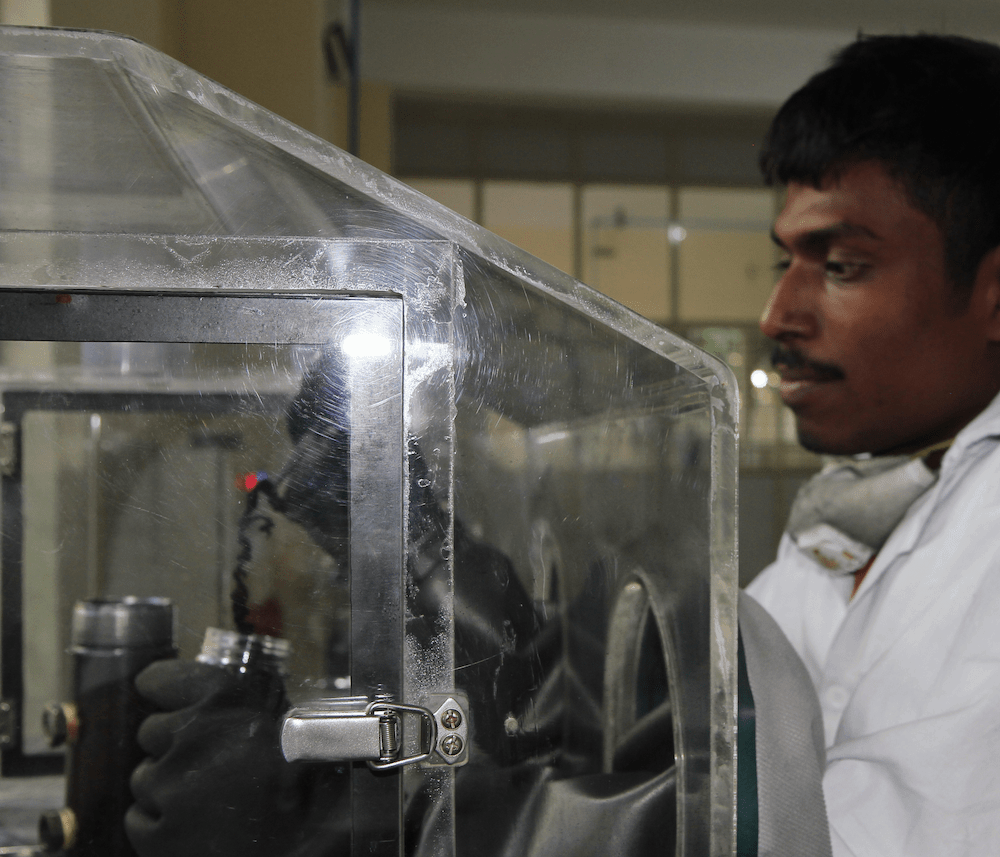
  • Anto assessing a new batch of Carbon Nanotubes
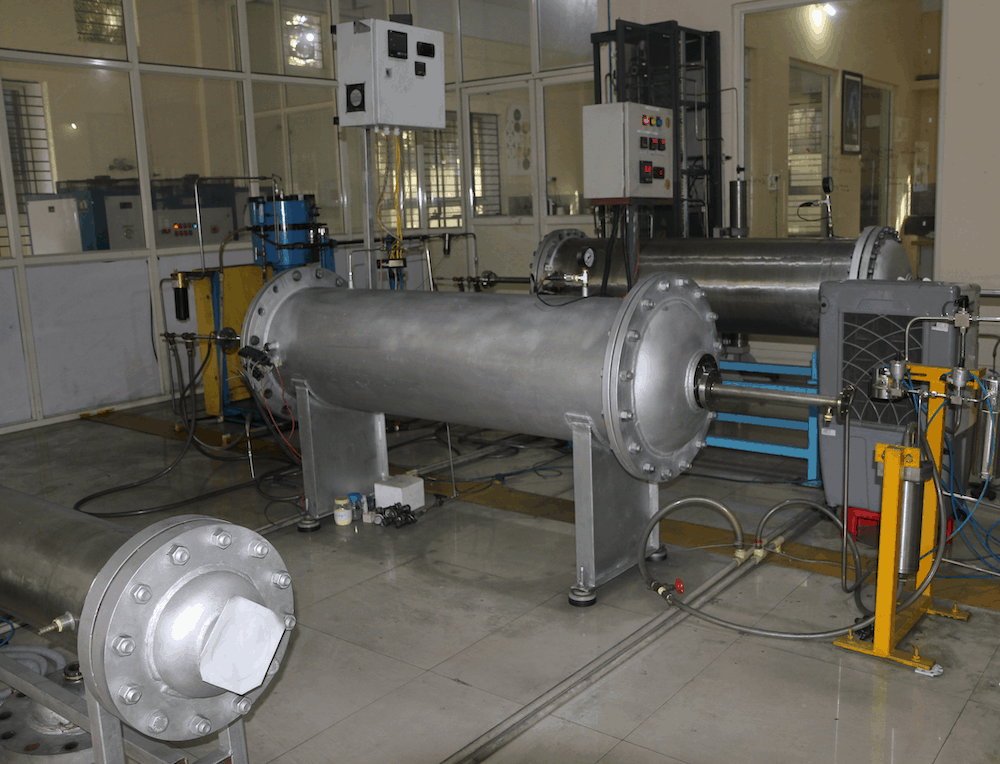
  • Manufacturing vessel
  • Raman Specrometer

Share this:

  • Click to share on LinkedIn (Opens in new window) LinkedIn
  • Click to share on Facebook (Opens in new window) Facebook
  • Click to share on Bluesky (Opens in new window) Bluesky

Episode 88 – India’s Private Space Sector

By Gurbir Dated: October 11, 2019 Leave a Comment

Narayan Prasad

No country has exploited space for social and economic benefits more than India. It has always been a government-run operation, until now.

As in other nations, the private space sector is emerging in India. One name that pops up when discussing private and commercial space in India is Narayanan Prasad. He has been instrumental in forging platforms where all stakeholders from the New Space Community can support each other and share views, opinions and news. The platforms include Whatsapp, Blog, Telegram and a New Space India Podcast.

In this episode, he recalls his journey so far and his part in his own start-up Satsearch.co as its COO. Here are some of the key takeaways from this interview


  • Most private sector players build products designed by ISRO under licence from ISRO. Private Space Sector in India is subject to excessive government bureaucracy preventing engagement from private investigators.
  • An independent regulator is needed. Independent regulator in telecommunication opened up the market for private telephone lines. An independent regulator for the private space sector is essential for this market to flourish.
  • NASA has created the Commercial Lunar Payload Service (CLPS) to engage the private space sector companies. India does not have anything equivalent.
  • This year ISRO established the New Space India Limited (NSIL). It was established to limit the potential impact of the Antrix/Devas case.
  • Policies exist in India for Communication and Remote Sensing but no overall policy for Space – yet. Although a draft Space bill was published in 2017 for comment. That bill drew a distinction between companies that work with ISRO and those outside ISRO.
  • Two of many space startups in India include 
    • Bellatrix Aerospace produces Ion engines for in-orbit spacecraft propulsion. Ion propulsion and reduce the spacecraft weight and extend the operational lifetime by about 60%
    • NoPo technologies are the only producer of Carbon Nanotubes in India. Like Graphene, Carbon Nanotube is an allotrope of Carbon. The unique properties include high tensile strength, electric and thermal conductivities.
  • Satsearch.co – now 3.5 years old based in the Netherlands and managed by a distributed team based in Germany, Netherlands, Italy and England.  Had it been based in India – it may have been subject to restrictions e.g queries coming in from Suparco in Pakistan.
  • As with any new emerging industry – most of the current space startups will cease to exist within 5-7 years from now.
https://media.blubrry.com/astrotalkuk_podcast_feed/astrotalkuk.org/wp-content/uploads/2019/09/Episode-88.mp3

Podcast: Play in new window | Download (Duration: 1:25:03 — 68.2MB) | Embed

Subscribe: Apple Podcasts | Spotify | RSS | More

Share this:

  • Click to share on LinkedIn (Opens in new window) LinkedIn
  • Click to share on Facebook (Opens in new window) Facebook
  • Click to share on Bluesky (Opens in new window) Bluesky

Episode 87 – Apollo Era recollections of a Brit working in NASA

By Gurbir Dated: July 12, 2019 Leave a Comment

David Baker has been involved with the USA since childhood. First attending a US school in England and then studying in the US under a scholarship program sponsored by Senator Clinton P Anderson. He returned to the USA and worked for NASA on various programs from Gemini to the SpaceShuttle. After leaving NASA, he set up one of the earliest private space sector companies in London.

(Note – following questions on the veracity of his Phd, David Baker resigned from the BIS as the editor of Spaceflight on 25th March 2021.)

Today he is the editor of the British Interplanetary Society’s monthly journal – Spaceflight and a prolific author of space books. Some of the topics we spoke about include

  • Early interest in space and astronomy stimulated by milestones such as breaking of the sound barrier, Sputnik and Gagarin’s flight.
    Completed his PhD in Earth and Planetary physics.
  • Worked for Nasa between 1965 and 1984. Mainly in the mission
    Setup a consultancy in 1984 to bring US launch and satellites services to the wider international community.
  • Setup a consultancy in 1984 to bring US launch and satellites services to the wider international community
  • Delayed the launch of STS-41B in February 1984 carrying payloads for Indonesia and Western Union but problems with the payload Assist Modules did not meet the insurance certification requirements.
  • Was involved in the purchase by India its 4 INSAT satellites (INSAT 1A-1D) from Ford Aerospace in the USA.
  • Published over 110 books and more in the pipeline to mark the 50th anniversary of Apollo 11.
https://media.blubrry.com/astrotalkuk_podcast_feed/astrotalkuk.org/wp-content/uploads/2019/06/Episode-87-Personal-recollections-of-a-brit-working-in-NASA.mp3

Podcast: Play in new window | Download (Duration: 52:44 — 55.9MB) | Embed

Subscribe: Apple Podcasts | Spotify | RSS | More


Share this:

  • Click to share on LinkedIn (Opens in new window) LinkedIn
  • Click to share on Facebook (Opens in new window) Facebook
  • Click to share on Bluesky (Opens in new window) Bluesky
« Previous Page
Next Page »

Find me online here

  • E-mail
  • Facebook
  • LinkedIn
  • Twitter
  • Vimeo
  • YouTube

subscribe to mailing list and newsletter

  • This field is for validation purposes and should be left unchanged.

Browse by category

Recent Comments

  • Frank Pleszak on Episode 117 – Early Aviation in Manchester
  • Gurbir Singh on Episode 111 – Chandrayaan-3
  • Lunar Polar Exploration Mission: Difference between revisions – भोजपुरी on Episode 82: Jaxa and International Collaboration with Professor Fujimoto Masaki
  • Gurbir on Public Event. Anglo Indian Stephen Smith – India’s forgotten Rocketeer
  • Sandip Kumar Chakrabarti on Public Event. Anglo Indian Stephen Smith – India’s forgotten Rocketeer

Archives

Select posts by topic

apollo astrobiology Astrophotography BIS Book Review Carl Sagan CCD China chines space Cloud Computing cnsa commercial Cosmology curiosity Education ESA Gagarin History India Infosec ISRO jaxa Jodrell Bank Mars Media Moon NASA podcast radio astronomy Rakesh Sharma rocket Rockets Roscosmos Science Science Fiction seti Solar System soviet space space spaceflight titan USSR video Vostok Yuri Gagarin

Copyright © 2008–2025 Gurbir Singh - AstrotalkUK Publications Log in