AstrotalkUK

Not for profit podcast. Astronomy, Deep Space Exploration and International Collaboration

  • Home
    • FAQ
    • Contact
    • About
    • Privacy Policy
  • Content
    • Podcast
    • All episodes
    • Book Review
    • Cyber Security
  • Events

Episode 113: Rocket Pioneer Hermann Oberth

By Gurbir Dated: April 5, 2024 Leave a Comment

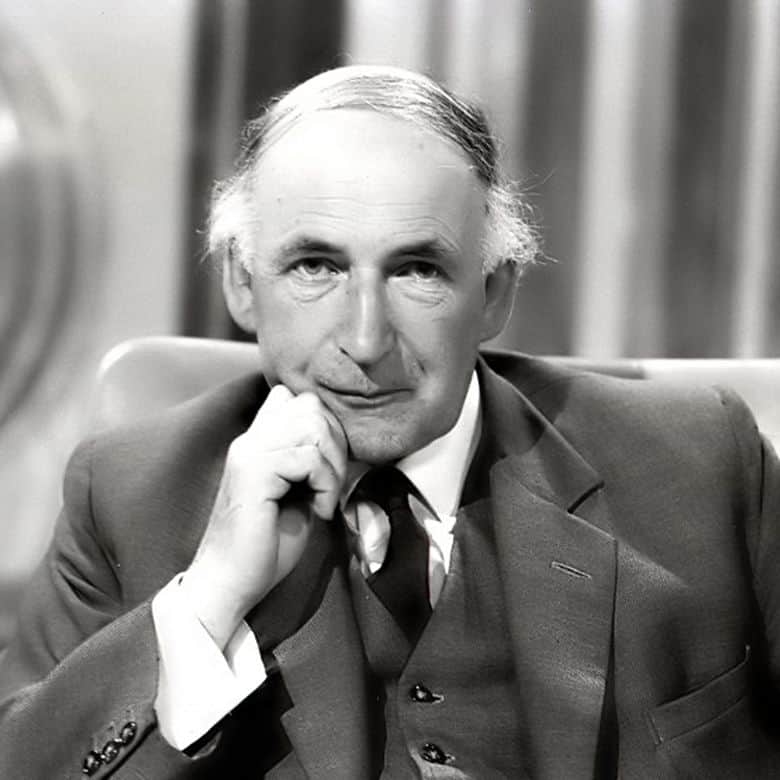
Hermann Oberth around 1950s. Public Domain
Hermann Oberth. Around 1950s

The idea of using rockets for transport had been well-established before the first flights of heavier-than-air aeroplanes in 1903. When it comes to turning that idea into reality, three names are considered as fathers of rocketry: Konstantin Tsiolkovsky, Robert Goddard and Hermann Oberth.

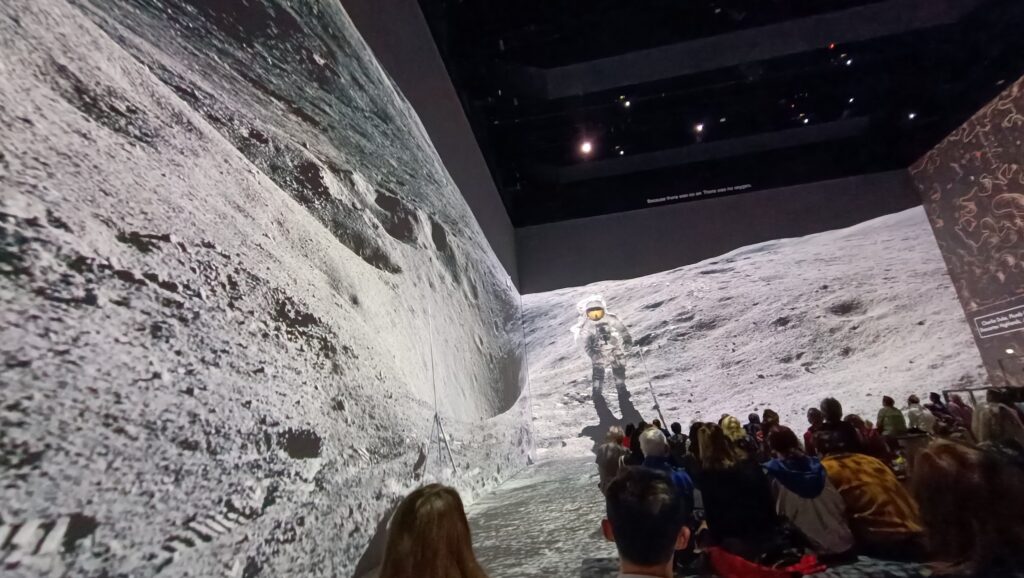
For this episode, I visited the Hermann Oberth Space Travel Museum in the German Town of Feucht, near Nuremberg and spoke with its director, Karl-Heinz Rohrwild. A summary of the interview is below, along with some pictures from the museum.

The museum is run entirely by volunteers in the interest of science. The exhibits on display are a tiny fraction of the total. Museum expansion was planned for the 100th anniversary of the publication of his second book in 1929, with plans to make many of the documents available online.I found Karl-Heinz very helpful, opening the museum for my visit during a public holiday. He and his colleagues extend that welcome to anyone wishing to visit. Contact details here.


Hermann Oberth Spaceflight Museum

Summary

  • His father had been a surgeon. He wanted Hermann to have a career in Medicine.
  • Brilliant at maths, but likely he was autistic at some level.
  • Lost his brother Adolf in WW1 and became anit-war.
  • Considered using a massive bomb delivered by rocket to destroy the senior people who decided to start and maintain the war.
  • Wrote two key books in rocketry in the 1920s
  • Fritz Lang, director of the early sci-fi Metropolis, followed by Frau im Mond. Oberth worked on that film as an advisor.
  • 1929: Winner of the International Award for Astronautics (Robert Esnault-Pelterie-Hirsch-Award)
  • Envisaged the use of solar energy in orbit and designed the first gyroscopes.
  • Also envisaged a huge space-based mirror that would beam power down to Earth for terrestrial use.
  • 1927 A member of the first and most successful space/rocketry society – Verien for Rsumshifffhart (Society of Space Travel)
  • Oberth championed the use of rocket staging, liquid engine propulsion and the use of rocket engines in the near vicinity of space (not in the atmosphere)
  • The RAF bombing raid on August 26, 1943, nearly killed both Oberth and Wernher von Braun, who were working there.
  • Post WW2 interrogated by Theodore von Karman and it was decided Oberth was not taken to the USA. In part, Oberth did not want to go.
  • 1951 was a tough year. He was making his living in part as a farmer.

https://media.blubrry.com/astrotalkuk_podcast_feed/astrotalkuk.org/wp-content/uploads/2024/04/Episode113_HermannOberth-1.mp3

Podcast: Play in new window | Download (Duration: 1:05:53 — 52.8MB) | Embed

Subscribe: Apple Podcasts | Spotify | RSS | More
Share this:

  • Share on LinkedIn (Opens in new window) LinkedIn
  • Share on Facebook (Opens in new window) Facebook
  • Share on Bluesky (Opens in new window) Bluesky

Episode 112: Brown Dwarfs, Dark Matter and Dark Energy

By Gurbir Dated: March 15, 2024 Leave a Comment

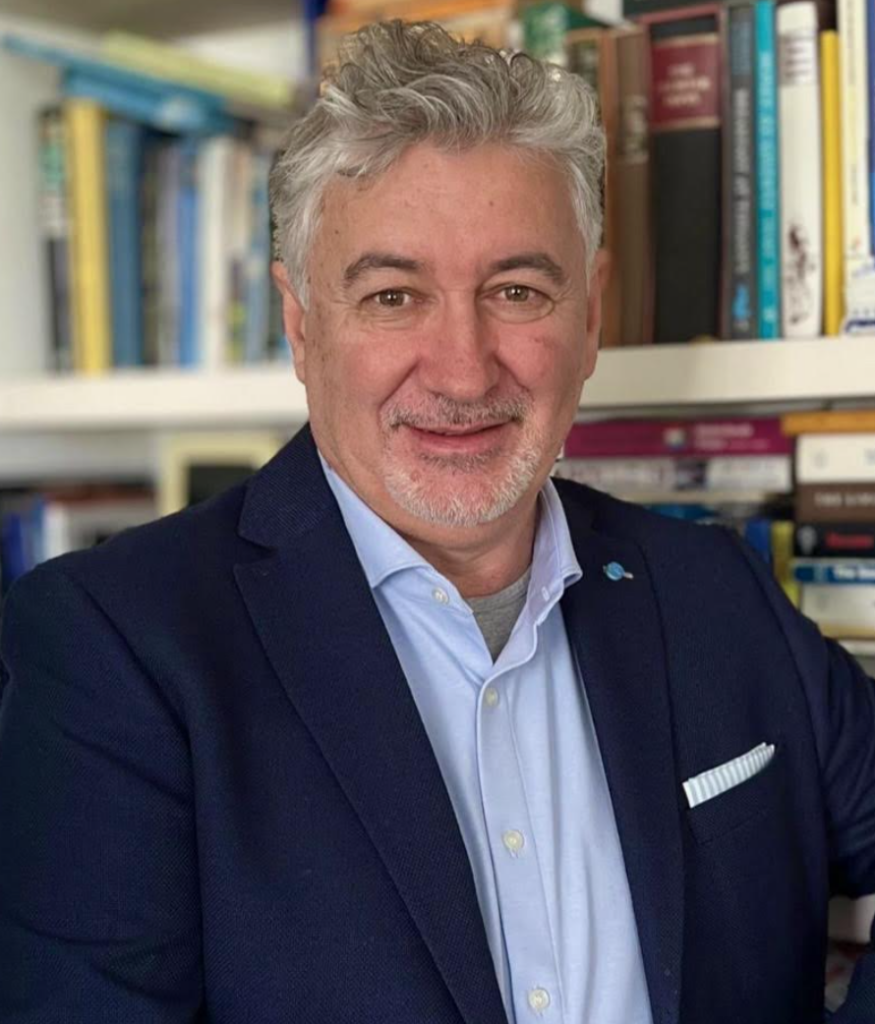
This episode was recorded in Tenerife with Professor Eduardo L Martín, who is based at the Instituto de Astrofísica de Canarias. He is working on the European Space Agency’s mission, Euclid.

In time, Euclid will shed light on both dark matter and dark energy. It was launched in July 2023 and arrived in its L2 orbit a month later. It has just two instruments, which will produce a high-resolution 3-D map of a third of the sky, stretching back 10 billion years during its initial 6-year operational lifetime.

Professor Martín is not part of the Euclid Consortium, which includes around 2500 scientists and engineers from more than a dozen countries who operate the Euclid Mission. He is one of the two Independent Legacy Scientists for the Euclid mission. Professor Martín is a specialist in substellar bodies, that is, celestial bodies with a size about that of Jupiter but with around 50 times its mass. When initially theorised in the 1960s, they were called Black Dwarfs, but were renamed Brown Dwarfs by Jill Tarter in the 1970s.

Brown Dwarfs generate energy only through gravitational compression, not nuclear fusion. There is an overlap in surface temperature between young brown dwarfs and old very low-mass stars. Martín and his collaborators have developed spectroscopic methods to distinguish brown dwarfs from stars, in particular, the Lithium test. More about this interesting role of Lithium in cosmology is in Professor Martín’s book, published in 2023 by the Institute of Physics, entitled “Lithium Across the Universe“. You can download several free-to-read chapters here.

Brown Dwarfs emit mostly infrared light, not optical light, like our sun. One of the two instruments on Euclid operates in the infrared and can detect these “dark ultracold objects of substellar mass”. Does Professor Martin think Euclid will find Brown Dwarfs? He told me in this recording, “that is what I put in the proposal, so we had better do now”. He is supported by a postdoctoral researcher, Marusa Zerjal, and a student, Diego Martin, both funded by the European Research Council.

The first images were released in November 2023. The spacecraft and its instruments are operating well and sending data. More about the Euclid mission, images released so far and a summary of the attributes of Normal Matter, Dark Matter and Dark Energy below.

https://media.blubrry.com/astrotalkuk_podcast_feed/astrotalkuk.org/wp-content/uploads/2024/03/Episode112_EuclidMission.mp3

Podcast: Play in new window | Download (Duration: 48:53 — 89.5MB) | Embed

Subscribe: Apple Podcasts | Spotify | RSS | More
Share this:

  • Share on LinkedIn (Opens in new window) LinkedIn
  • Share on Facebook (Opens in new window) Facebook
  • Share on Bluesky (Opens in new window) Bluesky

ISRO in the news

By Gurbir Dated: March 6, 2024 Leave a Comment

Three stories in the news related to the Indian Space Programme

1. The ISRO Chief ISRO chief S Somanath was diagnosed with more than 6 months ago. He saw him in Baku during IAC2023 – he looked well but was working to a hectic schedule – which is normal. The report below indicates that he is getting treatment and getting on with his job as normal. More here Times of India

2. A bit more detail but no schedule – for India’s lunar sample return mission. Two launch vehicles will be needed to complete the job. First the heavier LVM-3 with 3 parts – a propulsion module to get to the Moon, a Descent module to land and an Ascent module to come back to lunar orbit. The second will use the GSLV and contains two parts. A transfer module – transfers lunar samples in lunar orbit from the Ascent module and heads back to Earth and the second – a reentry module. This is part of the transfer module that will deliver the samples to the Earth’s surface.

No details of the landing point. It could be mainland India, the Indian Ocean or maybe the Australian outback. More on Reddit here

3. ISRO has published some details on the proposed design of the Next Generation Launch Vehicle. Three key innovations (a) use of methane with LOX – very popular at present (b) Reusable, at least in part using a barge at sea (c) The absence of a cryogenic stage, a technology that ISRO has spent lots of time and money on over the last 3 decades

The picture below from @ISROSpaceflight via Twitter/X

Share this:

  • Share on LinkedIn (Opens in new window) LinkedIn
  • Share on Facebook (Opens in new window) Facebook
  • Share on Bluesky (Opens in new window) Bluesky

Episode 111: Chandrayaan-3

By Gurbir Dated: November 30, 2023 1 Comment

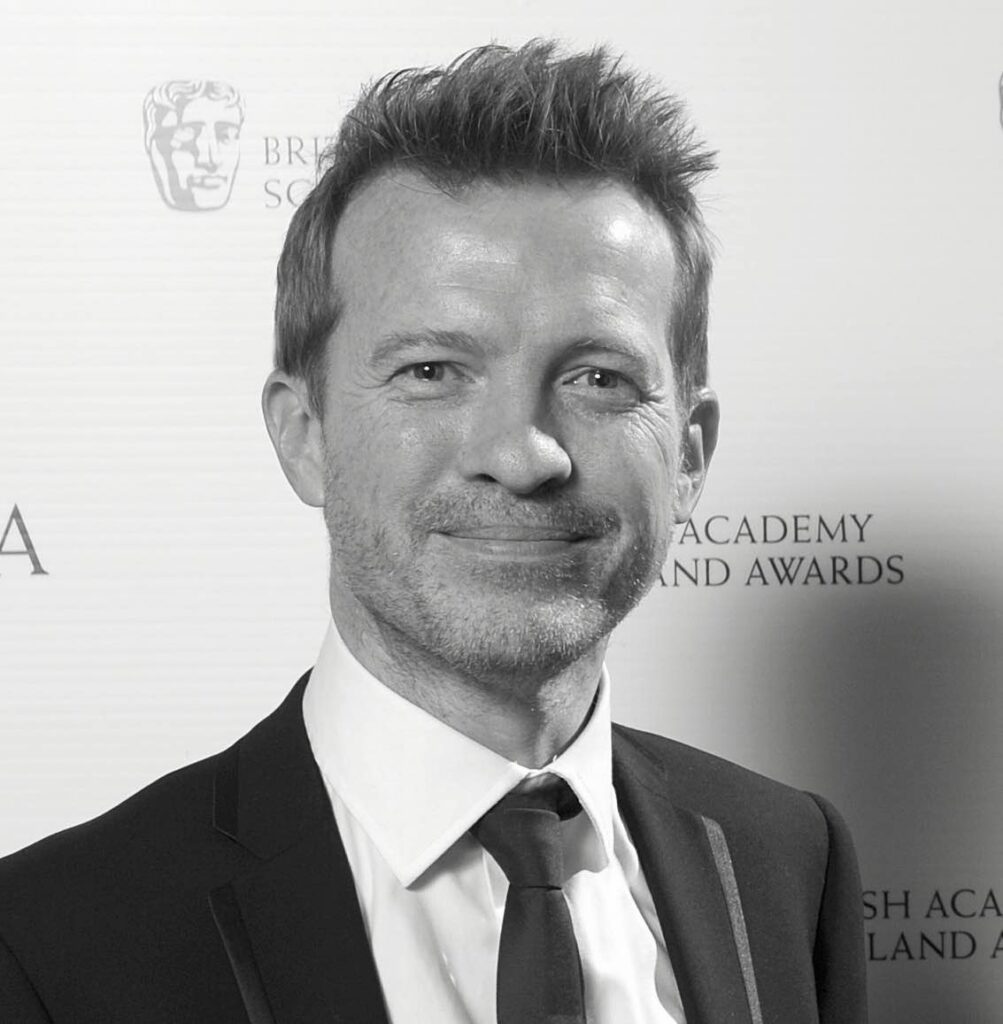
Project Director P Veeramuthuvel, Associate Project Director: Kalpana Kalahasti  and ISRO Chairman: S. Somanath
Project Director P Veeramuthuvel, Associate Project Director: Kalpana Kalahasti and ISRO Chairman: S. Somanath

Traditionally, an ISRO live stream event ends with a few short speeches from the ISRO chairman and several of the key personnel associated with the mission. On 23 August 2023, following the successful soft landing of Chandrayaan-3 lander, this tradition played out as normal. But this time, along with chairman Somanath on the stage was the Chandrayaan-3 Associate Project Director, Kalpana Kalahasti. Although ISRO has many female scientists, engineers, and managers, this was the first time (to my knowledge) that a woman made it to the stage during the live stream.

A qualified communications engineer, Kalapana Kalahasti, has worked on several missions, including the 2013 Earth observation satellite called SARAL, jointly with the French Space Agency CNES.

She was assigned as the Associate Project Director for Chandrayaan-3 in 2019 following the unsuccessful Chandrayaan-2 landing attempt. In this conversation, she recalls her journey with ISRO from 1999, when she joined as a radar engineer based at Sriharikota.

https://media.blubrry.com/astrotalkuk_podcast_feed/astrotalkuk.org/wp-content/uploads/2023/11/Episode111.mp3

Podcast: Play in new window | Download (Duration: 36:14 — 49.8MB) | Embed

Subscribe: Apple Podcasts | Spotify | RSS | More
Share this:

  • Share on LinkedIn (Opens in new window) LinkedIn
  • Share on Facebook (Opens in new window) Facebook
  • Share on Bluesky (Opens in new window) Bluesky
« Previous Page
Next Page »

Find me online here

  • E-mail
  • Facebook
  • LinkedIn
  • Twitter
  • Vimeo
  • YouTube

subscribe to mailing list and newsletter

  • This field is for validation purposes and should be left unchanged.

Browse by category

Recent Comments

  • Frank Pleszak on Episode 117: Early Aviation in Manchester
  • Gurbir Singh on Episode 111: Chandrayaan-3
  • Lunar Polar Exploration Mission: Difference between revisions – भोजपुरी on Episode 82: Jaxa and International Collaboration with Professor Fujimoto Masaki
  • Gurbir on Public Event. Anglo Indian Stephen Smith – India’s forgotten Rocketeer
  • Sandip Kumar Chakrabarti on Public Event. Anglo Indian Stephen Smith – India’s forgotten Rocketeer

Archives

Select posts by topic

apollo astrobiology Astrophotography BIS Book Review Carl Sagan CCD China chines space Cloud Computing cnsa commercial Cosmology curiosity Education ESA Gagarin History India Infosec ISRO jaxa Jodrell Bank Mars Media Moon NASA podcast radio astronomy Rakesh Sharma rocket Rockets Roscosmos Science Science Fiction seti Solar System soviet space space spaceflight titan USSR video Vostok Yuri Gagarin

Copyright © 2008–2026 Gurbir Singh - AstrotalkUK Publications Log in