AstrotalkUK

Not for profit podcast. Astronomy, Deep Space Exploration and International Collaboration

  • Home
    • FAQ
    • Contact
    • About
    • Privacy Policy
  • Content
    • Podcast
    • All episodes
    • Book Review
    • Cyber Security
  • Events

India’s Mars Orbiter Mission

By Gurbir Dated: November 5, 2013 Leave a Comment

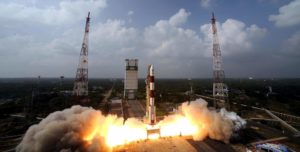
Mars Orbiter Mission - Photo - ISRO
Mars Orbiter Mission – Photo – ISRO

India launched its Mars Orbiter Mission (MOM) with its Polar Satellite Launch Vehicle (PSLV) launcher and everything, including the weather, performed as expected. The 1340KM Mars bound probe with a 15km  package of five science instruments will arrive at Mars in December next year.

Currently MOM is in Earth orbit where it will remain for another week.  Why? Because the Indian Space Research Organisation (ISRO) is still working on its more powerful launcher the Geosynchronous Launch Vehicle (GSLV) so had to use the less powerful but extremely reliable PSLV. Hence the modest science package and the requirement of six orbits of Earth for gravity assist.    Several engine firings  on  November 6, 7, 8, 9 and  11 are required, each one  increasing MOM’s speed. A final burn on 16th November will finally supply it the speed it needs to reach Mars. With another critical engine burn is required for arrival in Martian orbit on 1st of December. If that burn, almost a year from now fails, MOM will fly past Mars and be lost in space.

India’s space program was founded almost 50 years ago on the principle that space technology is an essential instrument for national development. Although commercial, military and scientific elements have since crept in, improving the quality of life for the huge Indian population, remains its primary objective.

ISRO has designated this as a technology demonstrator, India is building on the its Chandryaan-1 mission from 2008 but the engineering and technical challenges are an order of magnitude higher. ISRO was successful in reaching the Moon on its first attempt, it is hoping to do likewise with Mars.

Here is a 4 minute clip of my audio interview on Voice of Russia. I am introduced as a science journalist which of course I am not. 
Share this:

  • Share on LinkedIn (Opens in new window) LinkedIn
  • Share on Facebook (Opens in new window) Facebook
  • Share on Bluesky (Opens in new window) Bluesky

Episode 63: Rakesh Sharma India’s first and only spaceman

By Gurbir Dated: November 3, 2013 8 Comments

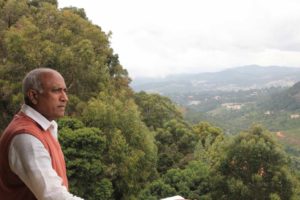
Rakesh SharmaWith a population of 1.2 billion people, India has just one national with first hand experience of spaceflight. Rakesh Sharma, a now retired Indian Air Force wing commander, in 1984 spent eight days in space aboard the Soviet space station Salyut 7. This account of his spaceflight was recorded at his home in the Nilgris region of India in August 2013.

https://media.blubrry.com/astrotalkuk_podcast_feed/astrotalkuk.org/wp-content/uploads/episode63.mp3

Podcast: Play in new window | Download (Duration: 35:52 — 32.8MB) | Embed

Subscribe: Apple Podcasts | Spotify | RSS | More

Share this:

  • Share on LinkedIn (Opens in new window) LinkedIn
  • Share on Facebook (Opens in new window) Facebook
  • Share on Bluesky (Opens in new window) Bluesky

India and Space

By Gurbir Dated: October 28, 2013 Leave a Comment

November 21st 2013 marks 50 years of the Indian space program. From humble beginnings devoid of infrastructure, experience or trained engineers, India today has an established track record of designing, building and launching satellites for its own national needs and commercially for others.

The next few podcast offer a glimpse of the people and achievements of this half a century old story .. so far.

Episode 62: An interview with Amrita Shah from the Indian Institute of Science in Bangalore. Author of the most comprehensive biography on Vikram Sarabhai (Vikram Sarabhai :  A Life). Book review of this fascinating book here.

Episode 63: Rakesh Sharma – India’s only spaceman. A video interview recorded in August 2013 where Rakesh Sharma talks about his spaceflight, its aftermath and his views on human spaceflight. Two minute trailer below.

Episode 64 – Bangalore Astronomical Society. Probably the most productive amateur astronomical society in India with a huge presence online and thus an international footprint.

Episode 65 – Professor UR Rao. A look back at the contribution of former ISRO chairman who was originally recruited in to the Indian Space program by Vikram Sarabhai. Whilst working at NASA in the early 1960s, a cosmic ray scientist Rao worked on several Pioneer and Explore spacecraft. Rao was in Dallas waiting to meet Kennedy on that fateful day…

Episode 66 –  Interview with director at the Vikram Sarabhai Space Centre originally known as Thumba Equatorial Rocket Launch Station. TERLS was the site of India’s first rocket launch in to space on 21st November 1963.

Rakesh Sharma two minute trailer


Share this:

  • Share on LinkedIn (Opens in new window) LinkedIn
  • Share on Facebook (Opens in new window) Facebook
  • Share on Bluesky (Opens in new window) Bluesky
« Previous Page

Find me online here

  • E-mail
  • Facebook
  • LinkedIn
  • Twitter
  • Vimeo
  • YouTube

subscribe to mailing list and newsletter

  • This field is for validation purposes and should be left unchanged.

Browse by category

Recent Comments

  • Frank Pleszak on Episode 117: Early Aviation in Manchester
  • Gurbir Singh on Episode 111: Chandrayaan-3
  • Lunar Polar Exploration Mission: Difference between revisions – भोजपुरी on Episode 82: Jaxa and International Collaboration with Professor Fujimoto Masaki
  • Gurbir on Public Event. Anglo Indian Stephen Smith – India’s forgotten Rocketeer
  • Sandip Kumar Chakrabarti on Public Event. Anglo Indian Stephen Smith – India’s forgotten Rocketeer

Archives

Select posts by topic

apollo astrobiology Astrophotography BIS Book Review Carl Sagan CCD China chines space Cloud Computing cnsa commercial Cosmology curiosity Education ESA Gagarin History India Infosec ISRO jaxa Jodrell Bank Mars Media Moon NASA podcast radio astronomy Rakesh Sharma rocket Rockets Roscosmos Science Science Fiction seti Solar System soviet space space spaceflight titan USSR video Vostok Yuri Gagarin

Copyright © 2008–2026 Gurbir Singh - AstrotalkUK Publications Log in