AstrotalkUK

Not for profit podcast. Astronomy, Deep Space Exploration and International Collaboration

  • Home
    • FAQ
    • Contact
    • About
    • Privacy Policy
  • Content
    • Podcast
    • All episodes
    • Book Review
    • Cyber Security
  • Events

Episode 83: India’s Human Spaceflight Programme with R Umamaheswaran

By Gurbir Dated: January 18, 2019 Leave a Comment

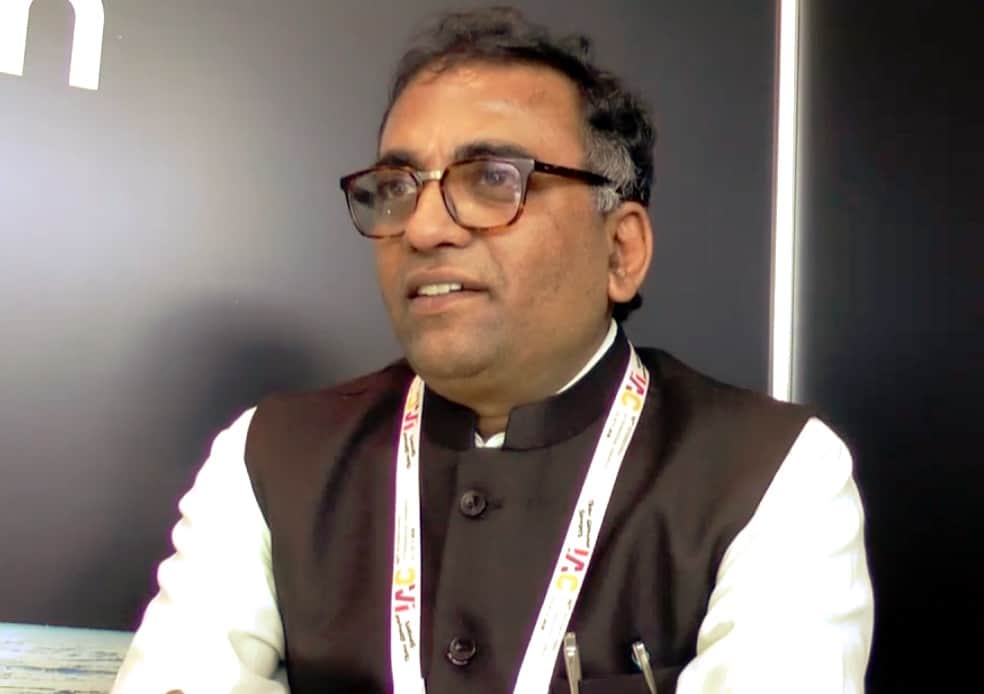
R. Umamaheshwaren. Credit: Author

R Umamaheswaren was born in 1963, the same year that India initiated its space programme with the first-ever launch of a rocket into space from Indian soil. He is currently serving as the Scientific Secretary to the chairman. This was recorded at the IAC2018 (so a little noisy background). Audio and video available below.

https://media.blubrry.com/astrotalkuk_podcast_feed/astrotalkuk.org/wp-content/uploads/2018/11/Episode-83-R-Umamaheswaren.mp3

Podcast: Play in new window | Download (Duration: 18:32 — 14.9MB) | Embed

Subscribe: Apple Podcasts | Spotify | RSS | More

He first joined ISRO in 1987 as an avionics and communications engineer at the VSSC and has held several posts including

  • Deputy director for the GSLV launch vehicle
  • Mission director for 3 GSLV launches
  • GSLV Mk3 to launch in November 2018 with high throughput satellites GSAT-29 to support the Digital India programme. A total of 100GBPS will be available from space once the other two satellites  are launched.
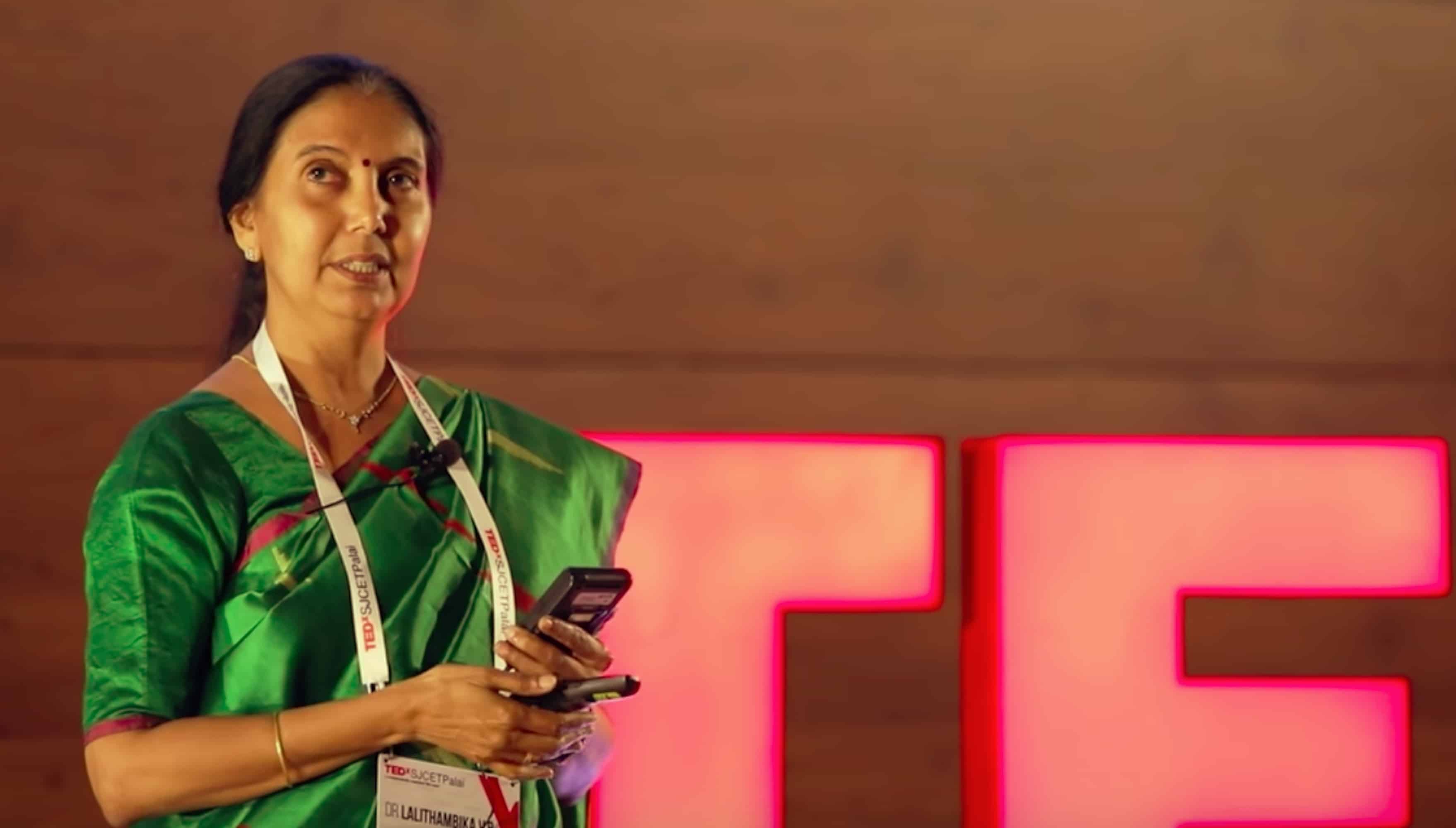
  • Dr. Lalitambika. Directeor of ISRO Human Spaceflight Programe. Credit TEDX
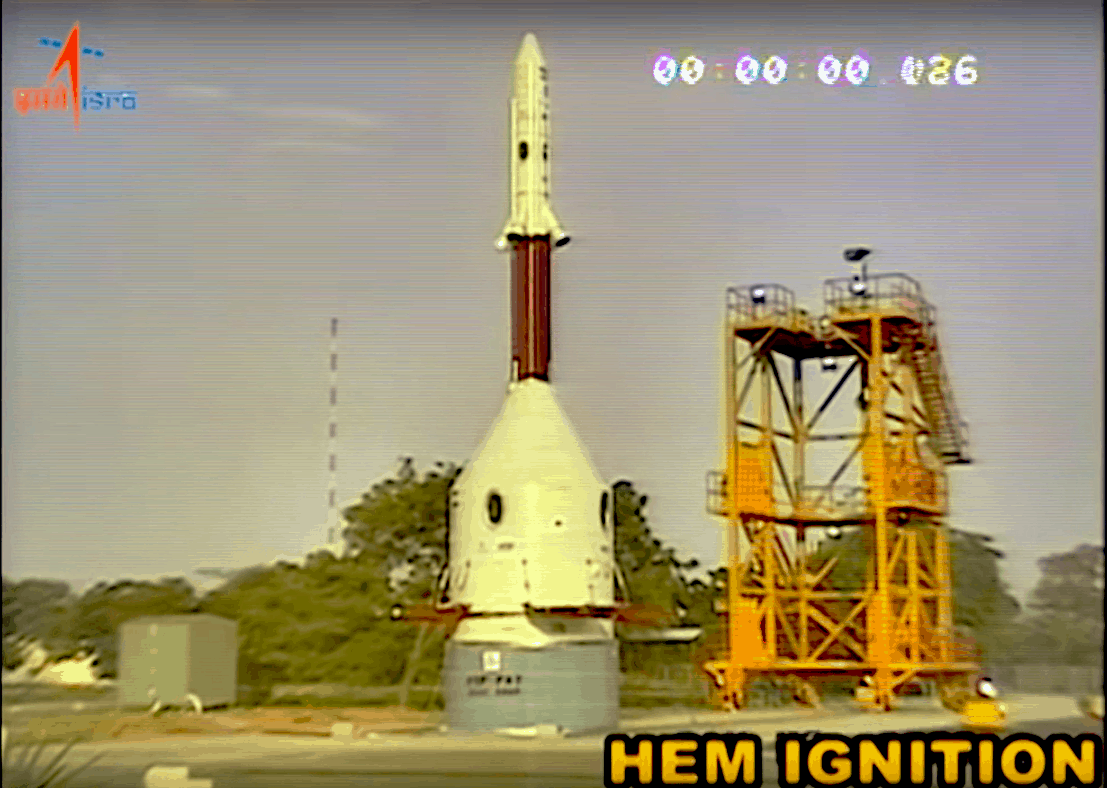
  • Pad Abort Test. Credit ISRO
  • Pad Abort Test. Credit ISRO
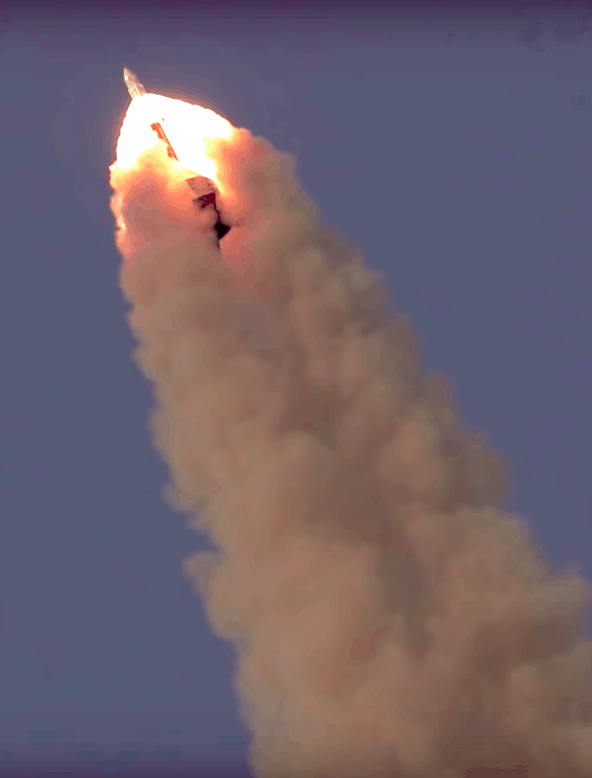
  • Pad Abort Test. Credit ISRO

Fundamental system and engineering challenges have been addressed and  India is ready for human spaceflight. ISRO conducted a Pad Abort Test on 5th July 2018 – Youtube video here. Currently, the roadmap looks like this

  • Crew selection – discussion underway.
  • Two uncrewed missions will take place – no animals required. Sensors and instruments will be sufficient.
  • Astronaut training – under discussion. Astronaut training support will be required from a third country – yet to be announced. 
  • Not necessary for potential applicants to be test pilots.
  • Prospect for a female to be part of the first crew is “very high”.
  • First uncrewed flight start in late 2020.
  • A longer vision for Human Spaceflight –  priorities not yet defined.

Share this:

  • Share on LinkedIn (Opens in new window) LinkedIn
  • Share on Facebook (Opens in new window) Facebook
  • Share on Bluesky (Opens in new window) Bluesky

Episode 82: Jaxa and International Collaboration with Professor Fujimoto Masaki

By Gurbir Dated: January 4, 2019 2 Comments

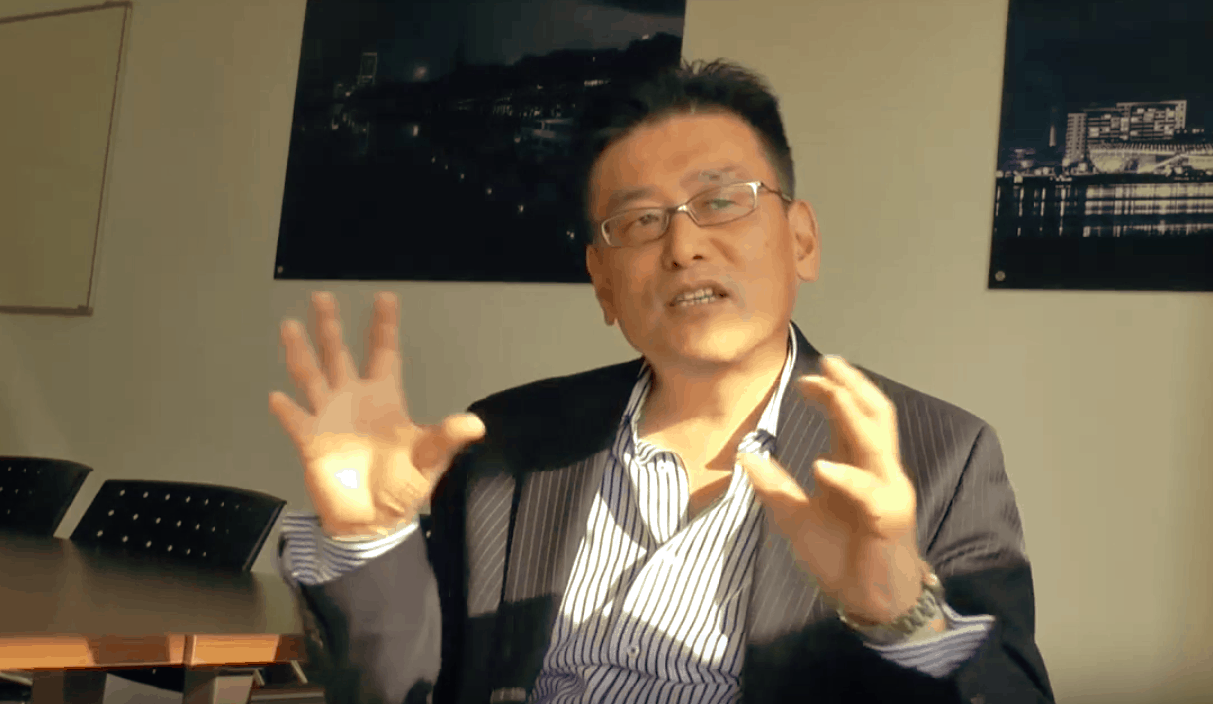
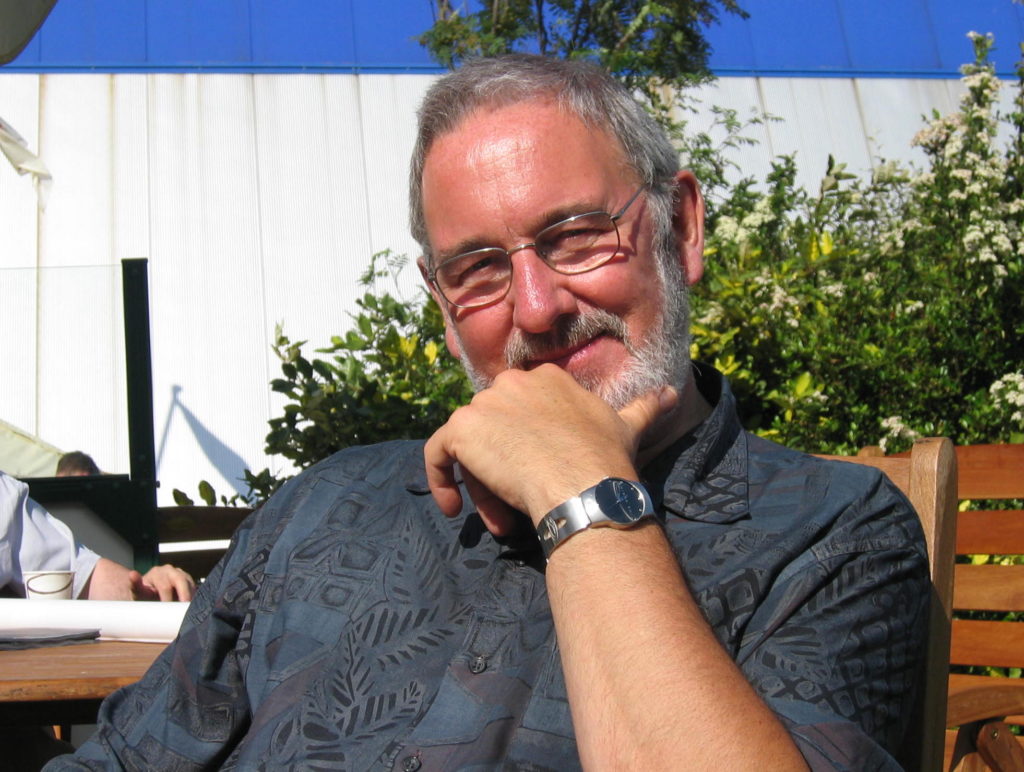
Prof. Fujimoto Masaki
Prof. Fujimoto Masaki. Credit author

 The Japan Aerospace Exploration Agency (JAXA) was founded in 2003 through the merger of three existing organisations and has an annual budget of around 2 billion USD. It has a remit for research and development of technology, space exploration and supporting human spaceflight aboard the ISS through collaboration with the European Space Agency. This episode is available in audio and video below.

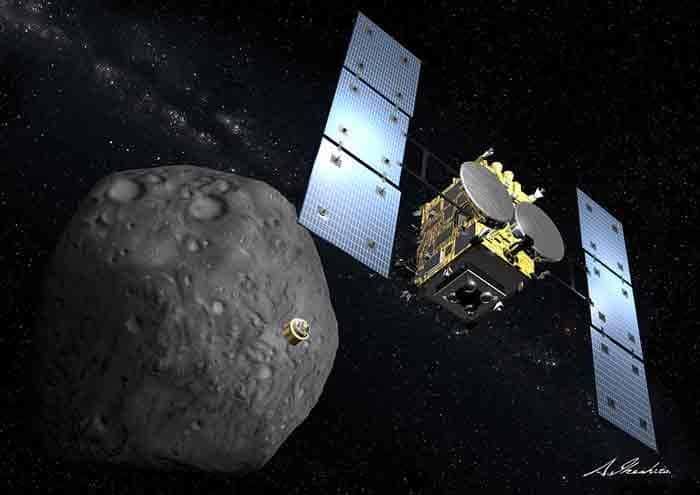
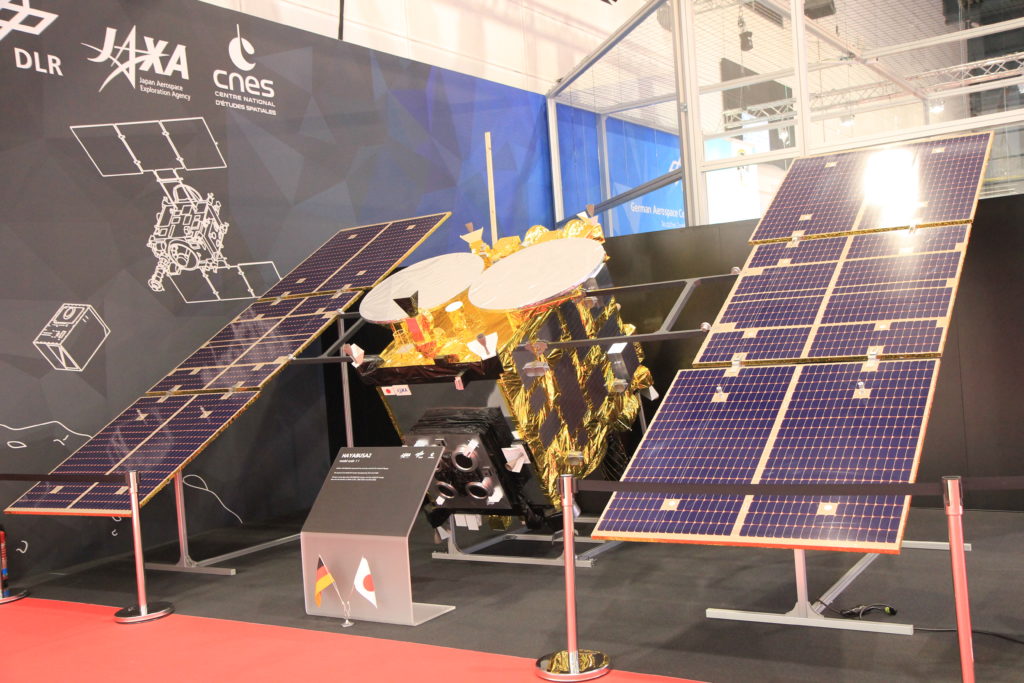
In 2003, JAXA launched Hayabusa-1 to explore the asteroid Itokawa. It arrived at Itokawa in 2005 and returned to the Earth with a tiny sample in 2010.  In 2014, JAXA launched Hayabusa-2 to explore asteroid Ryugu.  Hayabusa2 arrived at Ryugu on 27 June 2018 and will remain in Ryugu orbit until 2019. It will collect three discrete samples (between 0.1g and 1g in each case), store them in separate sealed containers on board for return to Earth in December 2020, in the Woomera test range in Australia.

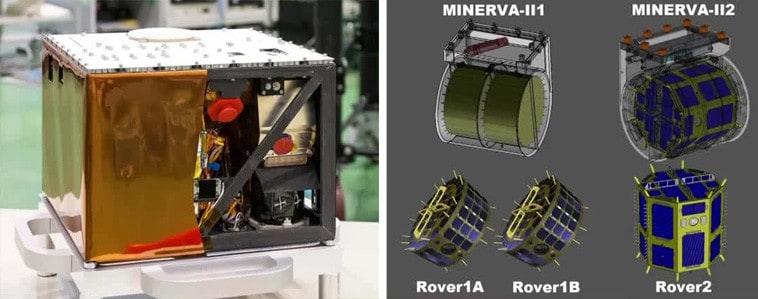
All four rovers. Credit ESA
Hayabusu 2 and Ryugu. Credit ESA
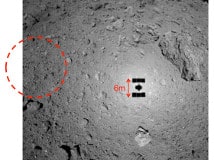
silhouette of Hayabusa2 on Ryugu. Credit JAXA

Hyabusa2 has four rovers.

  • MINERVA-II-1 contains two rovers, Rover-1A and Rover-1B, which were deployed on 21 September 2018.
  • Mascot – a rover developed by the German and French space agencies. Deployed on 3rd October 2018.
  • The MINERVA-II-2 contains ROVER-2, a payload developed by several universities in Japan and planned for deployment in July 2019.

JAXA is also considering

  1. 1 The launch of the world’s smallest lunar lander is intended to be launched on NASA’s Space Launch System in the 2020s.
  2. Smart Lander for Investigating the Moon (SLIM) will demonstrate precision landing technology. 
  3. Selene-R – a tentative joint JAXA/ISRO Moon mission to soft-land a rover on the Moon. Jaxa would supply the rover, and ISRO would supply the lander.
  4. MMX – Martian Moons Exploration. A martian sample return mission. Only possible with international collaboration (US, France, Germany). To be launched around 2024. Following a period of 3 years at Mars, it will return to Earth with a sample from Phobos in 2029. 
Prof. Fujimoto Masaki. Credit Author
https://media.blubrry.com/astrotalkuk_podcast_feed/astrotalkuk.org/wp-content/uploads/2018/11/Episode-82-Prof-Fujimoto-Masaki.mp3

Podcast: Play in new window | Download (Duration: 22:35 — 18.1MB) | Embed

Subscribe: Apple Podcasts | Spotify | RSS | More
Share this:

  • Share on LinkedIn (Opens in new window) LinkedIn
  • Share on Facebook (Opens in new window) Facebook
  • Share on Bluesky (Opens in new window) Bluesky

Episode 81: United Nations Office for Outer Space Affairs

By Gurbir Dated: December 14, 2018 Leave a Comment

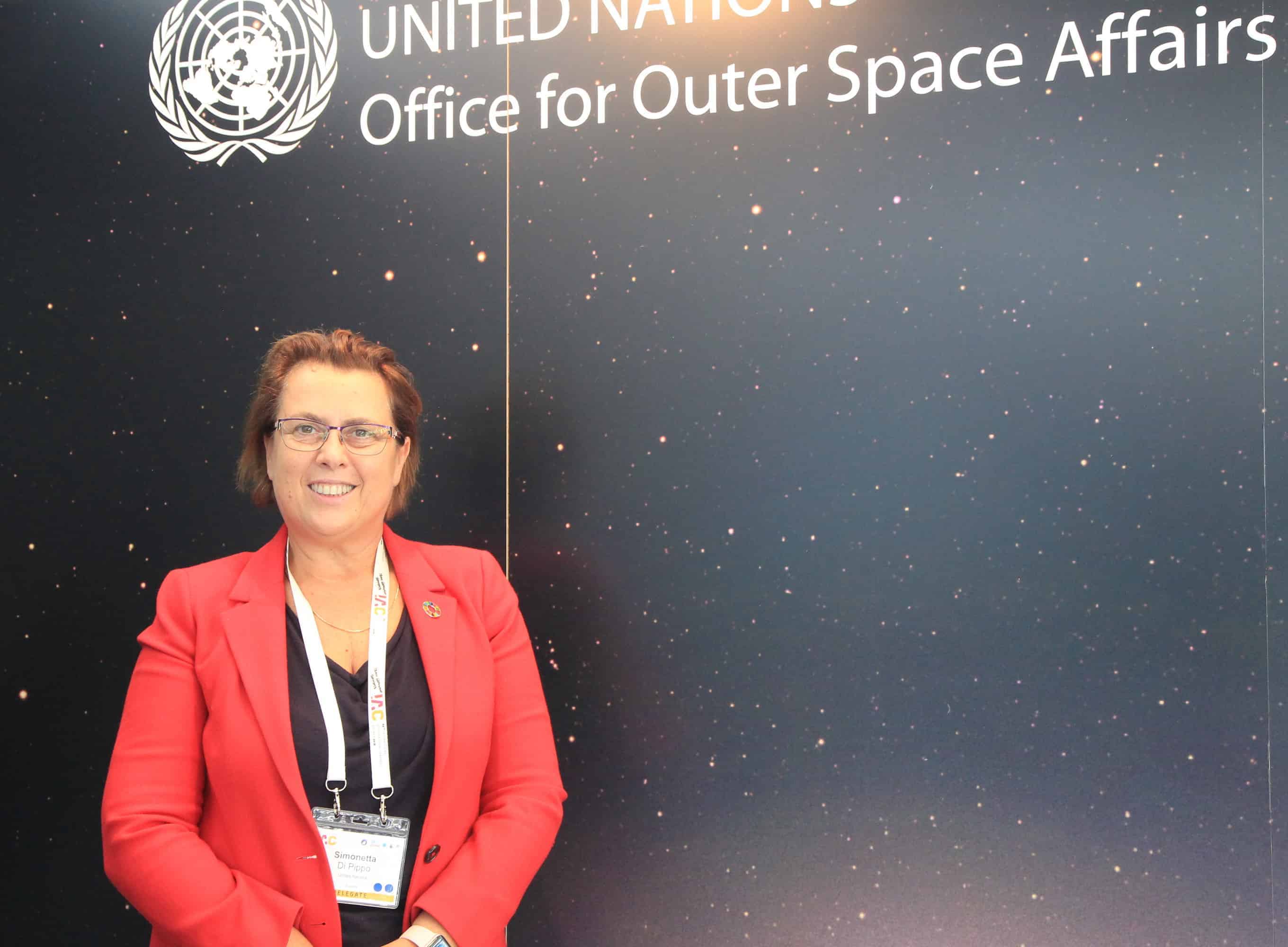
Simonetta Di Pippo. Director, United Nations Office for Outer Space Affairs. Credit: Author

Ensuring the peaceful uses of outer space has been the primary objective of the United Nations, as set out in the Outer Space Treaty, established in 1968. The United Nations Office for Outer Space Affairs (UNOOSA) achieves this by promoting international cooperation in the peaceful uses of outer space. This interview with UNOOSA director Simonetta Di Pippo was recorded at IAC 2018. Some parts may be a little noisy. An audio and video of this episode are available below.

UNOOSA serves as the secretariat for the General Assembly’s only committee dealing exclusively with international cooperation in the peaceful uses of outer space: the  United Nations Committee on the Peaceful Uses of Outer Space (COPUOS).

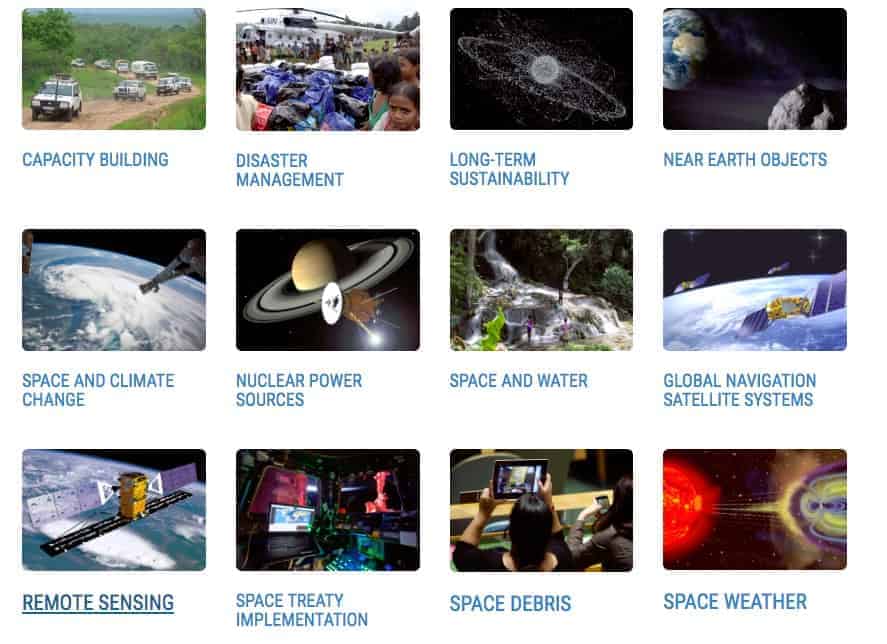
UNOOSA Projects. Credit UNOOSA
UN GNSS. Credit UNOOSA
Credit UNOOSA

Some of the highlights include:

  • UNOOSA is responsible for maintaining the public register of all space objects ever launched to Earth orbit and beyond.
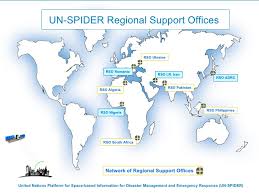
  • United Nations Platform for Space-based Information for Disaster Management and Emergency Response (UN-SPIDER)  is a flagship programme established in 2006.  UN-Spider has access to multiple space agencies to acquire historical and current satellite images to help with emergency disaster management from wherever they arise – Earthquakes, flooding, forest fires and threats from outer space, including Space weather and near-Earth Asteroids. 
  • Outer Space Treaty is a “masterpiece”. The UN operates through a consensus-based mechanism. It is this consensus that the Outer Space Treaty is so resilient. Still operational and relevant more than fifty years after it was founded. It remains coherent and powerful and will remain so through the coming phase of commercial space operations. 
  • UNOOSA acts as a broker to promote International Collaboration. The Japanese Space Agency is promoting small-satellite projects from developing nations and university students, thereby fostering the development of National Space Agencies worldwide (currently about 70 countries). The Japanese Space Agency, JAXA, is helping new countries such as Kenya, Hungary, UAE, Guatemala, Mauritius and Indonesia to have some level of space presence.
  • UNOOSA supported the China National Space Agency’s  Announcement of Opportunity to host payloads on the China Space Station. A total of 36 proposals were received for payloads aboard CSS. A selection process is now underway.
  • As a separate announcement, CNSA announced that China will host Pakistan’s first astronaut aboard the CSS by 2022. However, Pakistan’s Space Agency SUPARCO has not yet mentioned it on its website.
Simonetta Di Pippo. Director of the United Nations Office for Outer Space Affairs
https://media.blubrry.com/astrotalkuk_podcast_feed/astrotalkuk.org/wp-content/uploads/2018/11/Episode-81-UNOOSA.mp3

Podcast: Play in new window | Download (Duration: 25:12 — 20.2MB) | Embed

Subscribe: Apple Podcasts | Spotify | RSS | More
Share this:

  • Share on LinkedIn (Opens in new window) LinkedIn
  • Share on Facebook (Opens in new window) Facebook
  • Share on Bluesky (Opens in new window) Bluesky

Episode 80: S Somnath Director of Vikram Sarabhai Space Centre

By Gurbir Dated: November 30, 2018 Leave a Comment

S Somnath. Director of Vikram Sarabhai Space Centre. Credit. Author

S. Somnath joined the Vikram Sarabhai Space Centre (VSSC), Thiruvananthapuram in Kerala in 1985 and today he is its director. With more than three decades at ISRO, he has held several key posts, including director of the Liquid Propulsion Systems Centre. This episode is available in audio and video below.

This interview was recorded on 5th October 2018 in Bremen, Germany, during the IAC2018, so it is a little noisy in parts.

ISRO delegation at IAC2018. Credit IAC2018
Vikram Sarabhai Space Centre Credit ISRO
ISRO Stand at IAC 2018. Credit Author

Some highlights include

  • Satish Dhawan – Brought a new vision and restructured ISRO at the organisational level. He consolidated and integrated specialist centres throughout India into the national organisational structure that exists today.
  • Only solid propellants are manufactured on site at Sriharikota. Liquid and cryogenic propellants are transported over a day and a half from ISRO’s Liquid Propulsion Centre to Sriharikota. Currently, only roads are used, but sea transport may be an option in the future.
  • The heavy-lift GSLV Mk3 second development flight is scheduled to launch before the end of 2018.  A target of three successful development flights is required before GSLV Mk3 is designated as operational.
  • Currently, the Sriharikota launch capacity of 12 to 18 launches per year is determined by the industry’s capacity to manufacture launch vehicles. The private sector has all the technological competencies but lacks the capacity to deploy them. 
  • An additional launch site would not be of value at this time. Once private sector capacity increases within the next 2 to 3 years, additional launch sites would be useful.
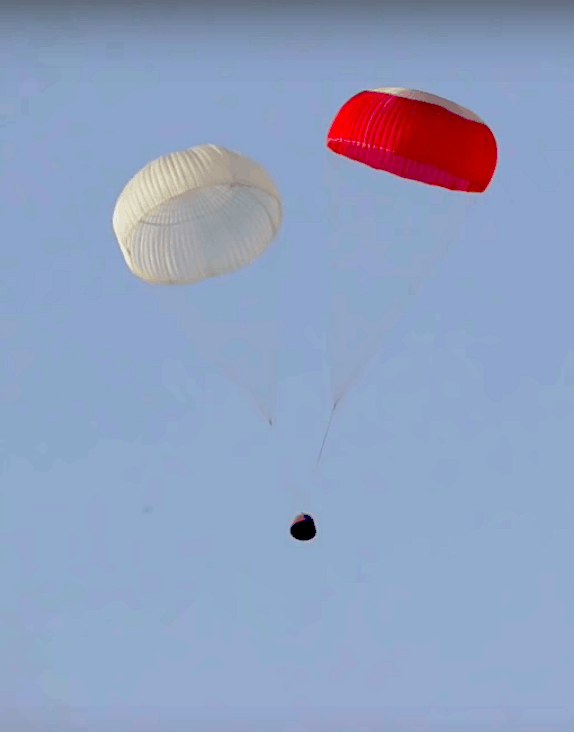
  • VSSC played a key role in developing the technologies required for the Human Space Flight programme. The  Pad Abort Test was successful. The parachute detached at the planned time and not prematurely, as it looks in the video.
S Somnath. Director of Vikram Sarabhai Space Centre
https://media.blubrry.com/astrotalkuk_podcast_feed/astrotalkuk.org/wp-content/uploads/2018/11/Episode-80-S-Somnath.mp3

Podcast: Play in new window | Download (Duration: 27:23 — 22.0MB) | Embed

Subscribe: Apple Podcasts | Spotify | RSS | More
Share this:

  • Share on LinkedIn (Opens in new window) LinkedIn
  • Share on Facebook (Opens in new window) Facebook
  • Share on Bluesky (Opens in new window) Bluesky
« Previous Page
Next Page »

Find me online here

  • E-mail
  • Facebook
  • LinkedIn
  • Twitter
  • Vimeo
  • YouTube

subscribe to mailing list and newsletter

  • This field is for validation purposes and should be left unchanged.

Browse by category

Recent Comments

  • Frank Pleszak on Episode 117: Early Aviation in Manchester
  • Gurbir Singh on Episode 111: Chandrayaan-3
  • Lunar Polar Exploration Mission: Difference between revisions – भोजपुरी on Episode 82: Jaxa and International Collaboration with Professor Fujimoto Masaki
  • Gurbir on Public Event. Anglo Indian Stephen Smith – India’s forgotten Rocketeer
  • Sandip Kumar Chakrabarti on Public Event. Anglo Indian Stephen Smith – India’s forgotten Rocketeer

Archives

Select posts by topic

apollo astrobiology Astrophotography BIS Book Review Carl Sagan CCD China chines space Cloud Computing cnsa commercial Cosmology curiosity Education ESA Gagarin History India Infosec ISRO jaxa Jodrell Bank Mars Media Moon NASA podcast radio astronomy Rakesh Sharma rocket Rockets Roscosmos Science Science Fiction seti Solar System soviet space space spaceflight titan USSR video Vostok Yuri Gagarin

Copyright © 2008–2026 Gurbir Singh - AstrotalkUK Publications Log in