AstrotalkUK

Not for profit podcast. Astronomy, Deep Space Exploration and International Collaboration

  • Home
    • FAQ
    • Contact
    • About
    • Privacy Policy
  • Content
    • Podcast
    • All episodes
    • Book Review
    • Cyber Security
  • Events

Episode 129: Space Law

By Gurbir Dated: December 18, 2025 Leave a Comment

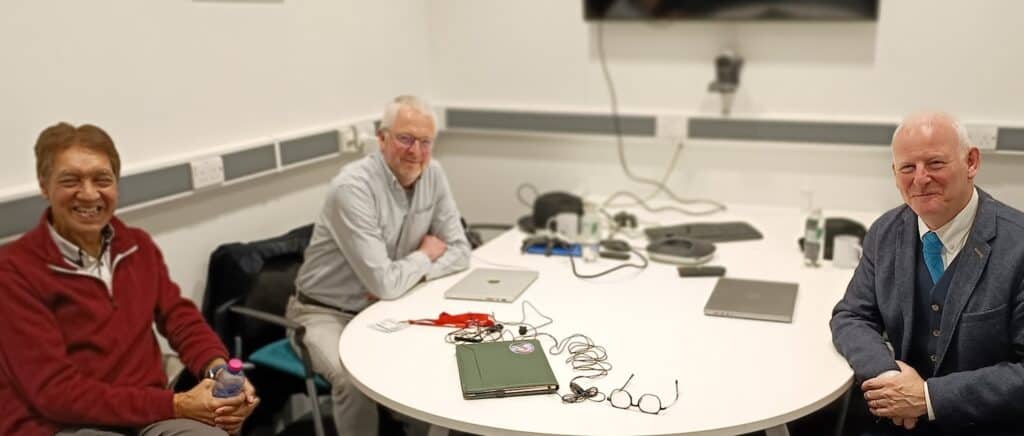
Professor Kai-Uwe-Schrogl. Cyprus November 2025

Professor Kai-Uwe Schrogl is a space law expert with experience in many roles, including working with the European Space Agency ESA, the German Federal Ministry for Economic Affairs and as the Director of the European Space Policy Institute (ESPI) in Vienna.

In this interview, recorded in Nicosia during cospar2025.org in November 2025, he discusses concerns about the lack of a universally accepted framework for behaviour and governance for the anticipated increase in commercial missions to the lunar surface by nations and companies.

In this discussion, we cover

  • Space law establishes outer space and the Moon as a global common, mandated by the 1967 Outer Space Treaty‘s principles of non-appropriation.
  • Outer space is a global common, like Antarctica, the high sea, and the deep seabed, intentionally protected from national appropriation.
  • Commercial interests and some nations are attempting to undermine the non-appropriation principle to claim resources, especially through lunar mining.
  • The beneficial 1979 Moon Agreement, which enables resource mining through a shared international regime, has not received widespread state ratification.
  • Lack of coordination among numerous state and private lunar missions risks conflicts over attractive sites and complicates the necessary oversight by the state.
  • The urgent need for Space Traffic Management (STM) is highlighted by the threat of Kessler syndrome, caused by growing space debris and mega-constellations.
  • States must harmonise national space licensing regulations to prevent competitive advantages arising from low standards and to avoid the use of flags of convenience.
  • Competing lunar governance approaches, including the Artemis Accords and the International Lunar Research Station (ILRS), demonstrate a lack of unified coordination and early signs that the UN’s Action Team on Lunar Activities Consultation may be the needed, universally agreed governance framework.

Share this:

  • Click to share on LinkedIn (Opens in new window) LinkedIn
  • Click to share on Facebook (Opens in new window) Facebook
  • Click to share on Bluesky (Opens in new window) Bluesky

Episode 126: Graphene: From scientific discovery to commercial application

By Gurbir Dated: October 31, 2025 Leave a Comment

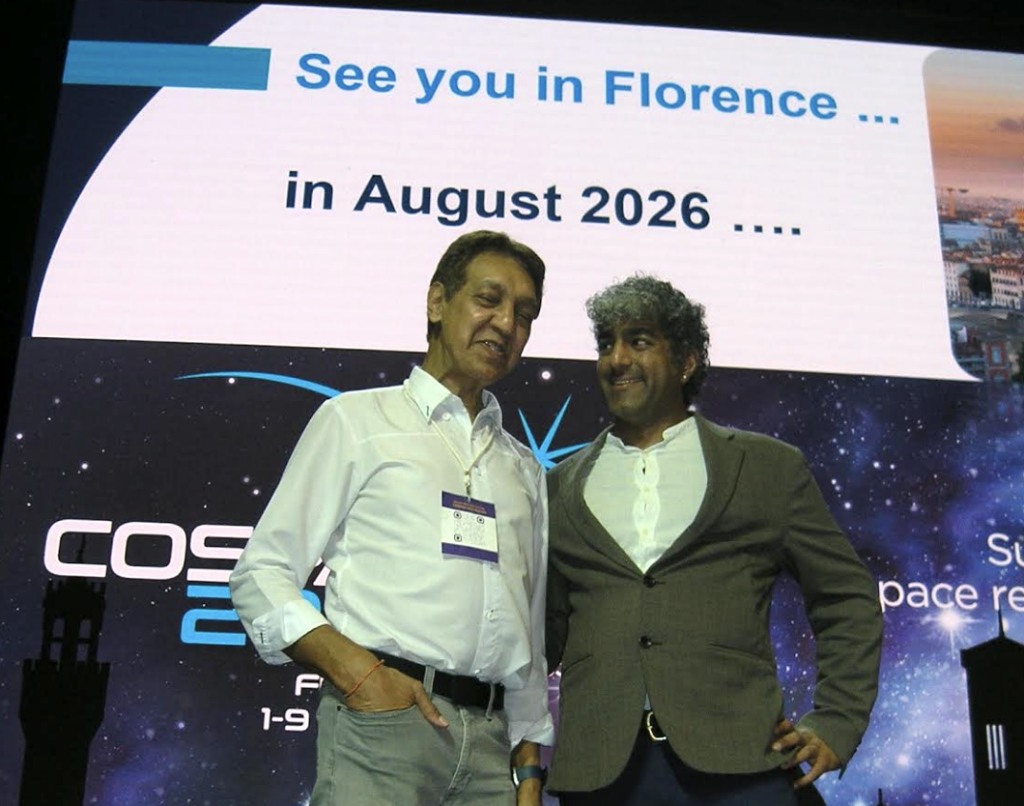
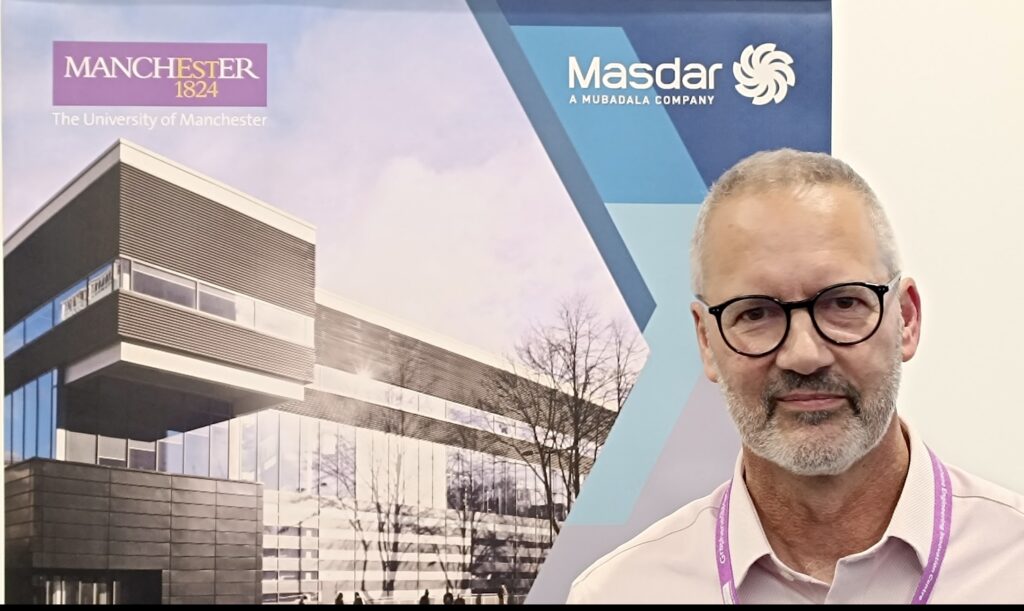
Professor James Baker

Professor James Baker, CEO of Graphene@Manchester, describes Manchester’s journey to commercialise the Nobel Prize-winning discovery of Graphene.

In this conversation, recorded at the University of Manchester Graphene Engineering and Innovation Centre, Professor Baker explains the steps Manchester (the City and the University, with support from central government and foreign investors) is taking to nurture startups, SMEs and established industries in developing a commercial ecosystem centred on the applications of Graphene. He describes the unique role of the UoM, the National Graphene Institute and the GEIC.

Some of the discussion points include

The following summary repeats the emphasis points you requested, condensing each into approximately a 10-word sentence, supported by comprehensive citations from the source material:

  • Graphene was isolated in Manchester in 2004, and its discovery won the Nobel Prize in Physics.
  • Manchester continues its history of innovation, fulfilling the “discovered in Britain” vision.
  • Extraordinary properties (e.g., 200 times stronger than steel) drive an industry “pull” philosophy.
  • Commercial applications include batteries, sensors, coatings, composites, and sustainable construction materials.
  • The National Graphene Institute (NGI) focuses on accelerating fundamental 2D material science with low Technology Readiness Level (TRL).
  • The GEIC is “industry-led but academic-fed,” accelerating high TRL commercialisation with know-how.
  • The Manchester Model (NGI/GEIC) helps companies navigate and accelerate through the “valley of death”.
  • The GEIC has fostered over 70 startups, many of which are now scaling up and opening factories.
https://media.blubrry.com/astrotalkuk_podcast_feed/astrotalkuk.org/wp-content/uploads/2025/10/Episode126_Graphene_JamesBaker.mp3

Podcast: Play in new window | Download (Duration: 1:11:52 — 58.7MB) | Embed

Subscribe: Apple Podcasts | Spotify | RSS | More
Share this:

  • Click to share on LinkedIn (Opens in new window) LinkedIn
  • Click to share on Facebook (Opens in new window) Facebook
  • Click to share on Bluesky (Opens in new window) Bluesky

Episode 125: Britian’s Greatest Pilot Captain Eric “Winkle” Brown

By Gurbir Dated: September 4, 2025 Leave a Comment

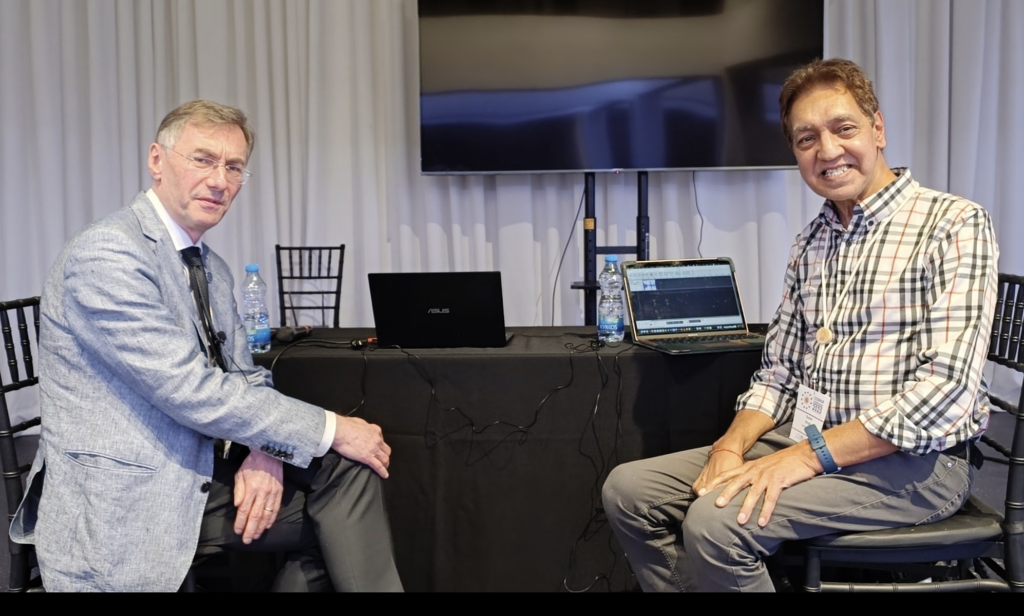
Captain Eric “Winkle” Brown. January 2011

You may have seen the BBC documentary Britain’s Greatest Pilot. Yes, he was an outstanding pilot, but there was much more to him than just that. I published extracts from an interview with Captain Eric Brown in April 2011. This extended version (over an hour) has not been published before .. until now.

In 2011 I visited Captain Eric Winkle Brown to record an interview on his one-to-one meeting with Yuri Gagarin on 13th July 1961 at the Admiralty in London. This was the day after Gagarin visited Manchester. After that discussion, the interview continued. Captain Brown spoke of his fond memories of a German WW1 pilot, Ernst Udet, who encouraged him to fly. During the war, he excelled as a test pilot and went on to become the chief test pilot at Farnborough.

After WW2, using his fluent German language skills, he interrogated Hermann Goering, Hanna Reitsch and Wernher von Braun. He spoke of a mission to Germany immediately after the war to acquire German aviation technology. Following a secret UK/USA deal, Britain passed its research on supersonic aviation to the USA and cancelled the Miles M.52 program. Had this deal not gone ahead, Eric Brown would have been the first to break the sound barrier in 1946; instead, Chuck Yeager claimed that record in 1947. He recalls that and many other stories in the interview recorded in his home in January 2011.

https://media.blubrry.com/astrotalkuk_podcast_feed/astrotalkuk.org/wp-content/uploads/2025/08/Episode125_BritainsGreatestPilot_EricBrown.mp3

Podcast: Play in new window | Download (Duration: 1:08:22 — 81.8MB) | Embed

Subscribe: Apple Podcasts | Spotify | RSS | More
Share this:

  • Click to share on LinkedIn (Opens in new window) LinkedIn
  • Click to share on Facebook (Opens in new window) Facebook
  • Click to share on Bluesky (Opens in new window) Bluesky

Episode 119: Professor Ivan Almar and Astronomy in Hungary during the Soviet Era 

By Gurbir Dated: January 9, 2025 Leave a Comment

During the International Astronautical Congress in Milan in October 2024, Professor Iván Almár was elected to be a member of the Astronautics Hall of Fame. 

Professor Ivan Almar
Professor Ivan Almar: Credit Konkoly Observatory Budapest, Hungary DSc

It is an honour previously bestowed on individuals or groups that in the past have included Apollo 11 astronauts,  NASA Administrator Charles Bolden,  Zezhou SUN Designer-in-Chief of Chang’e-4 Program, Yuri Koptev General Director of the Russian Space Agency, the James Webb Space Telescope team from (NASA, ESA and CSA), and the Tianwen-1 Spacecraft Development Team. 

I am familiar with Theodore Von Karman and Herman Oberth, both of whom are associated with Hungary. They played an instrumental role in the development of astronautics. Since Hungary was under the influence of the USSR for most of the post-WW2 years, the astronautics it conducted were not easily publicly accessible.

Ivan Almar completed his university studies in 1954 and became aware of the activities for the International Geophysical Year 1957-58. He knew that the USSR Academy of Sciences and other countries planned to build and launch satellites to observe the Earth from orbit. The coincidence of time and place set him on his long career. His contributions included 

  • Director of the Konkoly Observatory in Budapest 
  • The founding director of the Satellite Geodetic Observatory in Hungary
  • President of the Hungarian Astronautical Society 
  • Co-developer of the Rio Scale, used to quantify the impact of any public announcement regarding evidence of extraterrestrial intelligence. 
  • Author of the San Marino Scale to quantify the potential impact of employing electromagnetic communications technology to announce Earth’s presence. 
  • The London Scale can evaluate and present complex information about the scientific importance, validity and potential consequences of an alleged discovery of ET life.
  • I met and recorded this interview during the International Astronautical Congress in Milan on Friday, 18th October 2024.

I started by asking him how his interest in astronomy started.

https://media.blubrry.com/astrotalkuk_podcast_feed/astrotalkuk.org/wp-content/uploads/2025/01/Episode119-Prof-Ivan-Almar.mp3

Podcast: Play in new window | Download (Duration: 46:41 — 64.7MB) | Embed

Subscribe: Apple Podcasts | Spotify | RSS | More
Share this:

  • Click to share on LinkedIn (Opens in new window) LinkedIn
  • Click to share on Facebook (Opens in new window) Facebook
  • Click to share on Bluesky (Opens in new window) Bluesky
Next Page »

Find me online here

  • E-mail
  • Facebook
  • LinkedIn
  • Twitter
  • Vimeo
  • YouTube

subscribe to mailing list and newsletter

  • This field is for validation purposes and should be left unchanged.

Browse by category

Recent Comments

  • Frank Pleszak on Episode 117 – Early Aviation in Manchester
  • Gurbir Singh on Episode 111 – Chandrayaan-3
  • Lunar Polar Exploration Mission: Difference between revisions – भोजपुरी on Episode 82: Jaxa and International Collaboration with Professor Fujimoto Masaki
  • Gurbir on Public Event. Anglo Indian Stephen Smith – India’s forgotten Rocketeer
  • Sandip Kumar Chakrabarti on Public Event. Anglo Indian Stephen Smith – India’s forgotten Rocketeer

Archives

Select posts by topic

apollo astrobiology Astrophotography BIS Book Review Carl Sagan CCD China chines space Cloud Computing cnsa commercial Cosmology curiosity Education ESA Gagarin History India Infosec ISRO jaxa Jodrell Bank Mars Media Moon NASA podcast radio astronomy Rakesh Sharma rocket Rockets Roscosmos Science Science Fiction seti Solar System soviet space space spaceflight titan USSR video Vostok Yuri Gagarin

Copyright © 2008–2025 Gurbir Singh - AstrotalkUK Publications Log in